Most “K-drama food” lists tell you what a dish is called. This one tells you what Korean viewers see when that dish shows up on screen: the joke you missed in Parasite, why one ramyeon line makes Koreans laugh, and the little rules nobody explains, like who gets the chicken legs. Every dish comes with how Koreans really eat it, one Korean line to order it like a local, and where to get it in Seoul at 2026 prices.
Quick answer: Try jjapaguri (the Parasite “ram-don”) and dalgona (Squid Game) at home tonight. In Seoul, go for Pyongyang naengmyeon (₩15,000–18,000), chimaek ordered “ban-ban” (half and half), and ramyeon cooked by machine at a Han River convenience store.

K-drama foods at a glance
| Show or film | Dish | What most viewers miss |
|---|---|---|
| Parasite | Jjapaguri (“ram-don”) | Putting premium beef in instant noodles is the joke |
| Squid Game | Dalgona (ppopgi) | Licking the candy is a real playground trick |
| KPop Demon Hunters | Naengmyeon, seolleongtang, gimbap | Pyongyang naengmyeon is Korea’s most argued-over noodle |
| Extraordinary Attorney Woo | Gimbap | Her dad runs a gimbap shop |
| What’s Wrong with Secretary Kim | Ramyeon | “Ramyeon before you go?” is a pickup line |
| Itaewon Class | Sundubu-jjigae | A dead father’s recipe as a business plan |
| Goblin and many more | Chimaek | Koreans order “ban-ban” (half and half) |
| Start-Up | Corn dog | Koreans call it a “hot dog” |
| Vincenzo | Bungeoppang | Head first or tail first is a real debate |
| My Roommate Is a Gumiho | Jjajangmyeon | The food of moving day and lonely singles |
| When Life Gives You Tangerines | Jeju tangerines | Jeju’s winter crop, sold by the box |
| Tastefully Yours | Countryside Korean cooking | Set near Jeonju, Korea’s food capital |
Parasite: jjapaguri, the “ram-don” joke
The scene: The rich mother phones ahead and orders “ram-don” with sirloin. The housekeeper has eight minutes to cook it.
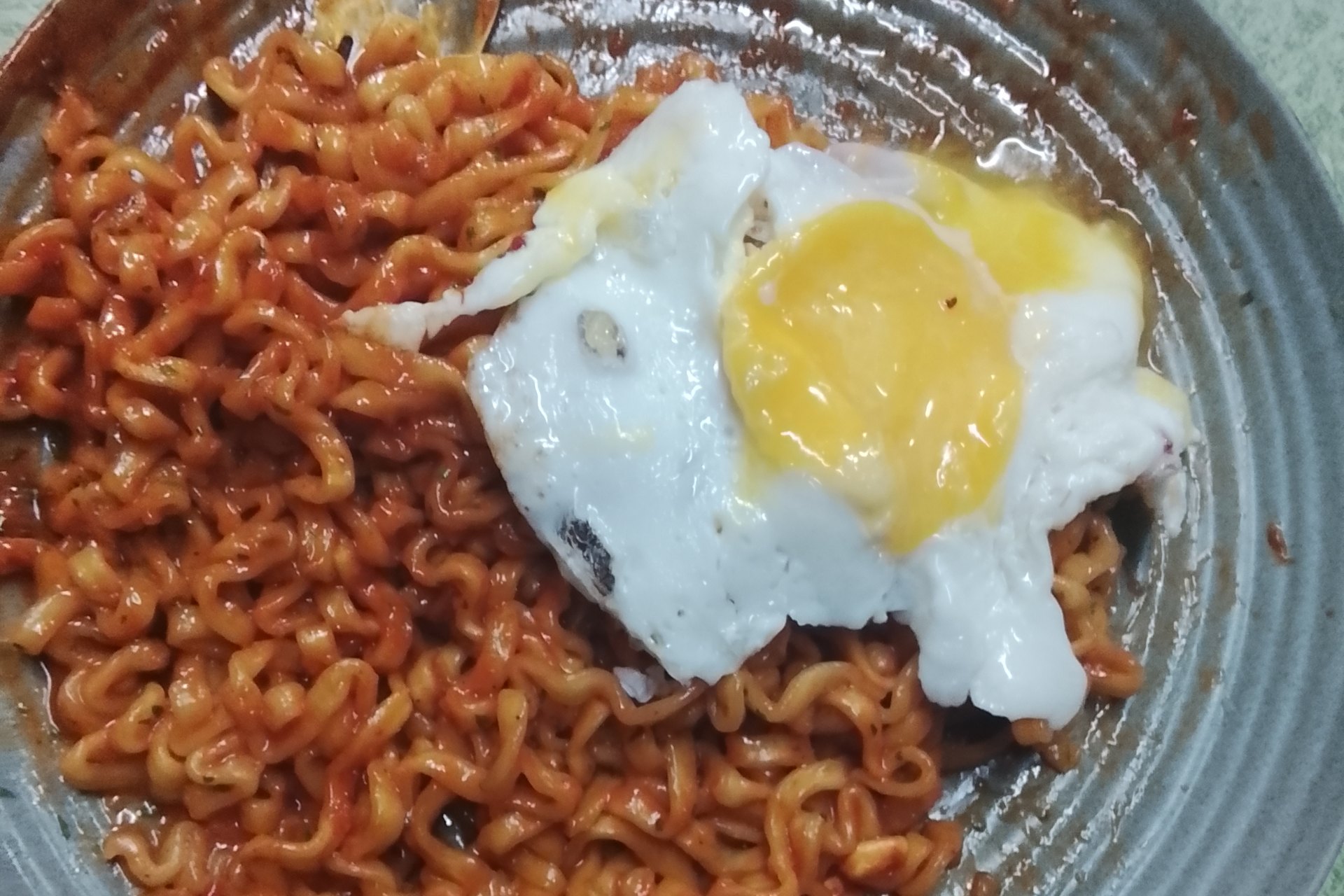
What a Korean sees in it: Jjapaguri (짜파구리) is a cheap, kid-friendly mash-up of two instant noodles, Chapagetti and Neoguri. Every Korean grew up with Chapagetti’s old TV slogan, “On Sundays, I’m the Chapagetti chef.” So when the wealthiest family in the film tops a lazy-weekend snack with premium sirloin, Korean audiences laughed: it is the whole class divide in one bowl. “Ram-don” itself was invented for the English subtitles; no Korean says it.
How Koreans actually eat it: At home on a weekend, straight from the pot, often with kimchi on the side. Adding beef is the movie version. The real local upgrade is a fried egg and the dried kelp piece from the Neoguri packet left in.
Try it yourself: Boil one Chapagetti and one Neoguri with their flakes in about 600 ml of water for 4–5 minutes. Pour off the water, leaving about 8 tablespoons. Add the whole Chapagetti sauce and oil plus half the Neoguri powder and stir over the heat for a minute. Top with seared, salted beef cubes if you want the film version. Both noodles are in every convenience store; see our Korean ramyeon combos for more mixes.

Squid Game: dalgona
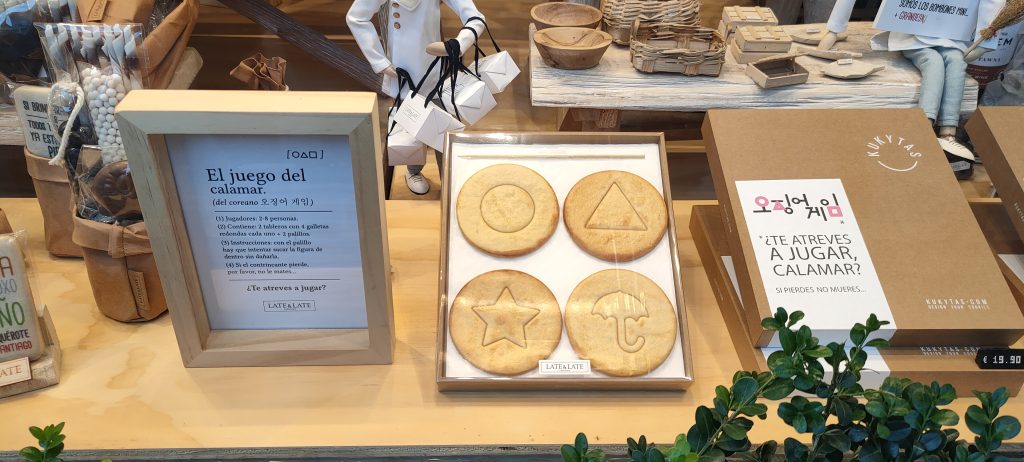
The scene: In the honeycomb challenge, players must carve a shape out of thin sugar candy with a needle. Gi-hun survives by licking the back of the candy to melt it.
What a Korean sees in it: Koreans over 30 call it ppopgi (뽑기) and remember it from the street stall outside primary school. If you got the shape out whole, the vendor gave you another one free. Licking it, warming the needle and tapping along the line were all real tricks, which is why Korean viewers cheered at that scene.
How Koreans actually eat it: As a game, not a dessert. You buy it to try the shape, then eat the broken pieces.
Try it yourself: Melt 1 tablespoon of sugar in a ladle over low heat until amber, stir in a tiny pinch of baking soda until it foams, pour onto oiled baking paper, wait 10 seconds, press flat and stamp it. Hot sugar burns, so keep kids back. In Seoul you will sometimes find dalgona stalls in tourist streets like Insadong and Myeongdong; see our Myeongdong street food prices.
KPop Demon Hunters: naengmyeon, seolleongtang and gimbap
The scene: The girls slurp Pyongyang-style naengmyeon early in the film and warm up with seolleongtang, a milky ox-bone soup, after rehearsal. Gimbap, cup ramyeon and fish cake skewers keep appearing in the background.
What a Korean sees in it: Pyongyang naengmyeon is the most argued-over noodle in Korea. The broth is so subtle that first-timers call it “dishwater,” while fans queue for it all summer. Seolleongtang is the opposite: pure comfort, the soup you eat when you are worn out.
How Koreans actually eat it: At a Pyongyang naengmyeon house, taste the broth first before adding vinegar or mustard; purists add nothing. Seolleongtang arrives unsalted on purpose. Add salt and chopped spring onion at the table, and many Koreans pour in a spoonful of the kkakdugi (radish kimchi) juice.
Order it like a local: 물냉면 하나 주세요 (mul-naengmyeon hana juseyo) — “One cold-broth naengmyeon, please”
Try it yourself: As of May 2026, a bowl costs ₩18,000 at Woo Lae Oak (우래옥), ₩16,000 at Eulmildae (을밀대) and ₩15,000 at Pildong Myeonok (필동면옥). For seolleongtang, Imun Seolnongtang (이문설농탕) in Jongno has served it since the early 1900s and is often called Seoul’s oldest restaurant.

Extraordinary Attorney Woo: gimbap
The scene: Woo Young-woo eats gimbap almost every meal because she can see every ingredient in each slice.
What a Korean sees in it: Her father runs a small gimbap restaurant, so gimbap is home food for her, not a quick snack. Gimbap is the cheapest proper meal in Korea, which is why the show uses it: it says “ordinary” in a way foreigners do not catch.
How Koreans actually eat it: Bought by the roll (jul) and eaten with a cup of ramyeon or the free broth some shops serve. Koreans also pack it for picnics and long drives.
Order it like a local: 김밥 한 줄 주세요 (gimbap han jul juseyo) — “One roll of gimbap, please”
Try it yourself: Gimbap shops are on every block. Tank’s pick is Ogong Gimbap near Hyehwa; see our gimbap and ramyeon guide.
What’s Wrong with Secretary Kim: ramyeon
The scene: Kim Mi-so innocently offers her boss some ramyeon, and he is the one who gets flustered.
What a Korean sees in it: “Do you want to eat ramyeon before you go?” (ramyeon meokgo gallae?) has been Korea’s most famous pickup line since the 2001 film One Fine Spring Day. Koreans still use it as a joke, so any ramyeon offer in a romance is a wink to the audience.
How Koreans actually eat it: Late at night, from the pot lid instead of a bowl, with kimchi. Add an egg and a slice of cheese if you want it the Korean way.
Try it yourself: Eat it like Koreans do on a summer evening: Han River park convenience stores, for example in Yeouido, sell ramyeon in paper bowls that a machine fills and boils for you. Check heat levels first in our Buldak spice chart.
Itaewon Class: sundubu-jjigae
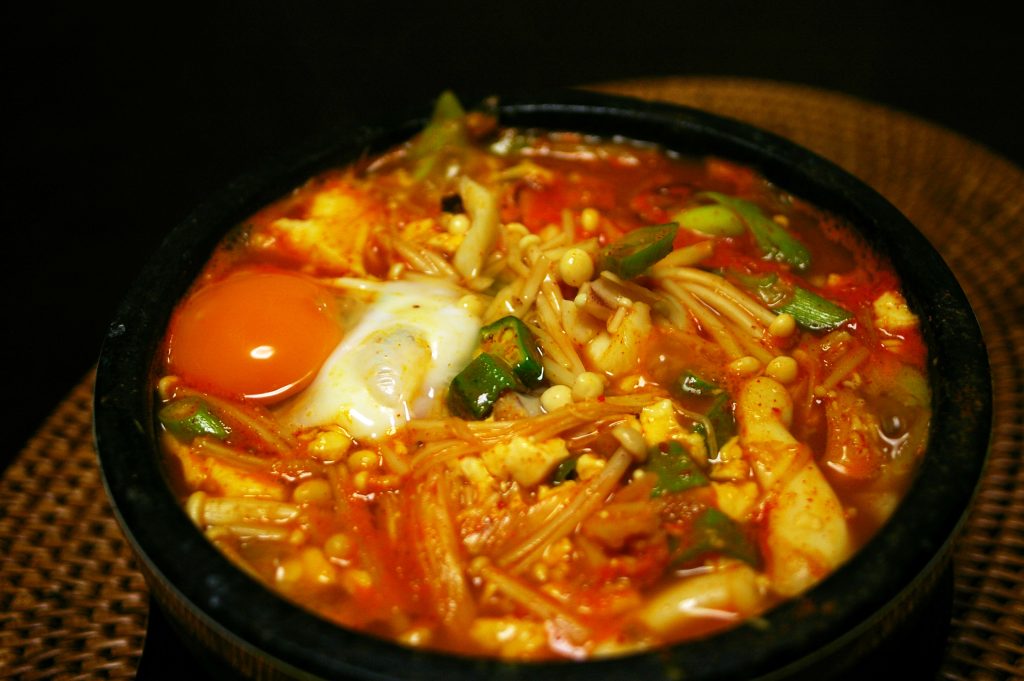
The scene: Park Sae-ro-yi builds his pub around his late father’s sundubu-jjigae and wins a cooking contest with it.
What a Korean sees in it: Turning a family recipe into a business is a very Korean underdog story; many famous Korean restaurants claim a grandmother’s or father’s recipe. The stew itself is everyday food, which is why it works as the hero’s weapon against a food giant.
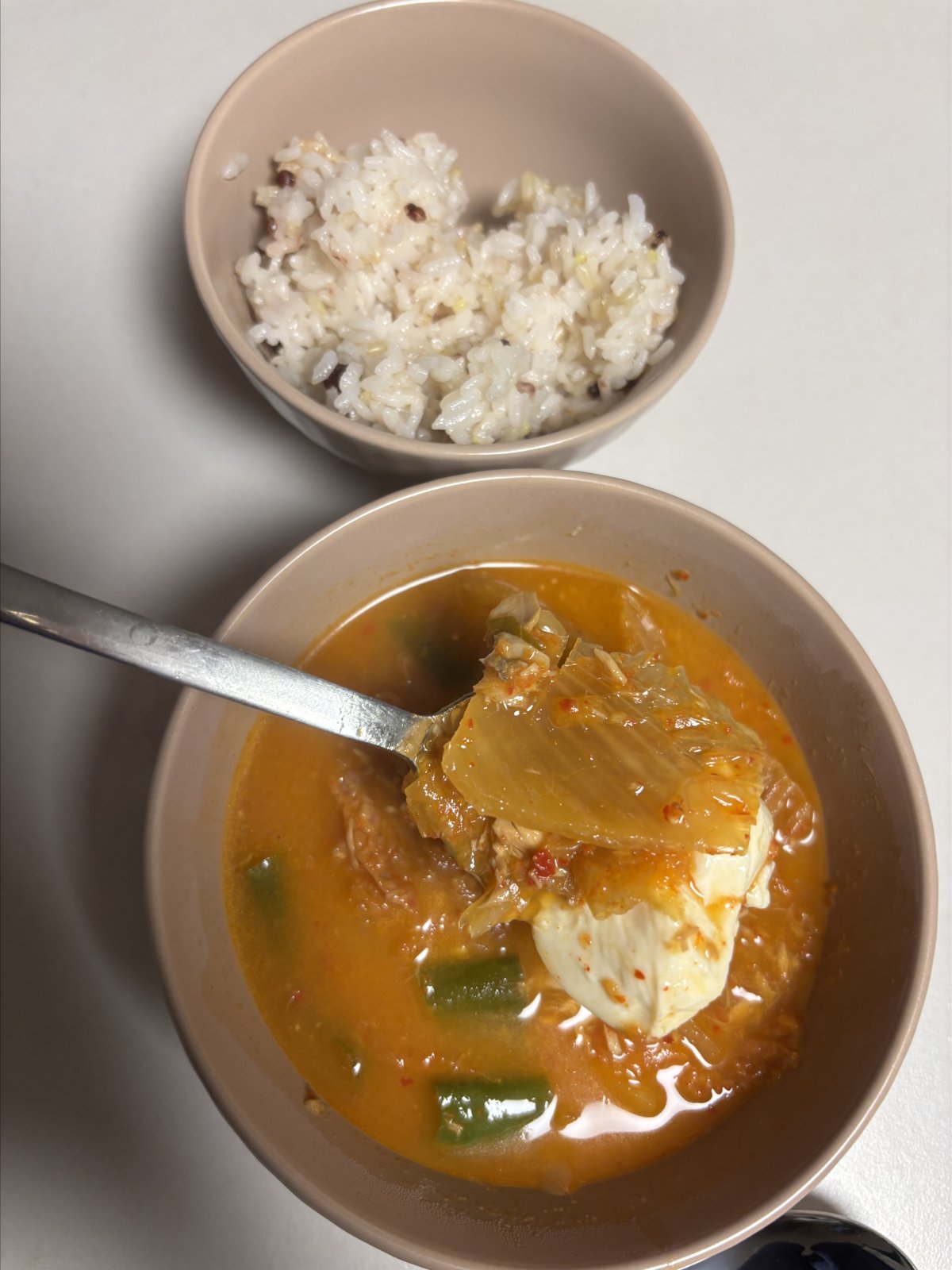
How Koreans actually eat it: Boiling hot in a stone pot with a bowl of rice. Crack the raw egg in yourself and let it cook in the stew.
Order it like a local: 덜 맵게 해 주세요 (deol maepge hae juseyo) — “Make it less spicy, please”
Try it yourself: Sundubu restaurants are everywhere in Seoul. For a day trip, Chodang Sundubu Village in Gangneung makes the original white, unspicy tofu with seawater.
Chimaek: fried chicken and beer
The scene: Fried chicken turns up in countless K-dramas, from Goblin, where the heroine works at a chicken restaurant, to every late-night delivery scene.
What a Korean sees in it: Chimaek (chicken + maekju, beer) is how Koreans celebrate, watch football and get over breakups. Its unofficial rule: the person who paid, or the youngest, gets the drumsticks. Watch for who takes the legs in drama scenes.
How Koreans actually eat it: Most people cannot choose between plain fried and sweet-spicy yangnyeom, so they order half and half. It always comes with cubes of pickled radish (chicken-mu) to cut the grease.
Order it like a local: 반반 주세요 (ban-ban juseyo) — “Half fried, half spicy, please”
Try it yourself: Look for a “hof” (chicken and beer pub) after 6 p.m. or order delivery; see our food delivery apps guide.

Start-Up: the Korean corn dog
The scene: Grandma Choi Won-deok shares corn dogs with Han Ji-pyeong, the homeless teenager she takes in, and the snack keeps returning as their memory.
What a Korean sees in it: Koreans call it a “hot dog” (핫도그), not a corn dog. Rolling it in sugar sounds strange abroad but is the classic version from Korean school snack stalls.
How Koreans actually eat it: Rolled in sugar, then ketchup and mustard on top. Order half-sausage, half-mozzarella for the cheese pull.
Order it like a local: 설탕 뿌려 주세요 (seoltang ppuryeo juseyo) — “Sugar on it, please”
Try it yourself: Corn dog chains are on every shopping street in Seoul.
Vincenzo: bungeoppang
The scene: Vincenzo and Cha-young argue over the difference between bungeoppang and ingeoppang, the carp and goldfish versions of the same snack.
What a Korean sees in it: Their argument is an inside joke: Koreans really do debate bungeoppang trivia, the biggest one being whether you eat it head first or tail first.
How Koreans actually eat it: Hot from a street cart on a cold day, usually three or four in a paper bag. Red bean (pat) is classic; custard (syukeurim) is the kids’ choice.
Order it like a local: 팥으로 세 개 주세요 (pat-euro se gae juseyo) — “Three red bean ones, please”
Try it yourself: Carts appear from about November to February. Prices and locations are in our Korean winter street food guide.

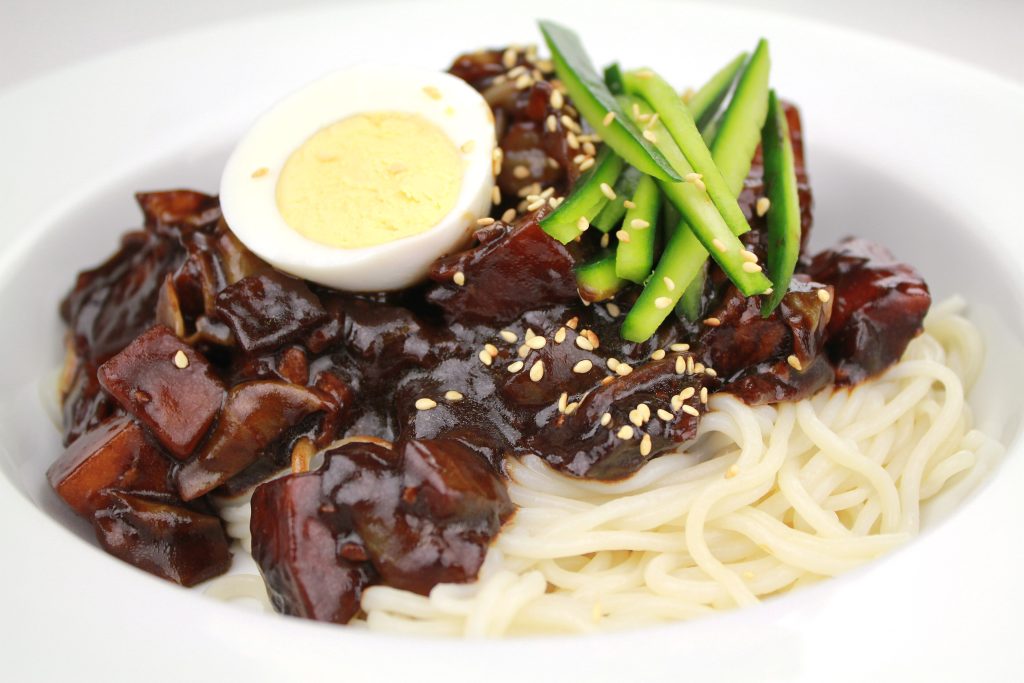
My Roommate Is a Gumiho: jjajangmyeon
The scene: Lee Dam devours a bowl of black bean noodles so enthusiastically that it scares off a date.
What a Korean sees in it: Jjajangmyeon is what Koreans order on moving day, when the kitchen is still in boxes, and what singles eat on Black Day (April 14), Korea’s anti-Valentine’s Day. A messy jjajangmyeon scene usually means “this character has stopped trying to impress anyone.”
How Koreans actually eat it: Delivered fast, mixed thoroughly before the first bite, with yellow pickled radish and raw onion dipped in black bean paste on the side.
Order it like a local: 곱빼기로 주세요 (gopbbaegi-ro juseyo) — “A double portion, please”
Try it yourself: Incheon Chinatown is where the dish was born and has a Jajangmyeon Museum. In Seoul, any Chinese-Korean restaurant (junggukjip) has it.
When Life Gives You Tangerines and Tastefully Yours
When Life Gives You Tangerines is set on Jeju Island, home of Korea’s tangerines (gamgyul), which roadside stalls sell by the box all winter. Tastefully Yours (2025) follows a chef with a one-table countryside restaurant near Jeonju, Korea’s food capital and the home of bibimbap. Both regions are in our Busan & Beyond series, starting with what to eat in Busan. For the chefs from Netflix’s cooking competition, see our Culinary Class Wars restaurant guide.
Seen characters cracking eggs on each other’s foreheads in a sauna? That is the jjimjilbang. Our jjimjilbang guide explains the snacks, the sheep-head towel and how to visit.
FAQ
What is “ram-don” in Parasite called in Korean?
Jjapaguri (짜파구리), a mix of Chapagetti and Neoguri instant noodles. “Ram-don” (ramyeon plus udon) was made up for the English subtitles, so do not ask for it by that name in Korea.
Why do Koreans laugh at ramyeon scenes in K-dramas?
Because “Do you want to eat ramyeon before you go?” is a well-known pickup line. Any ramyeon invitation between two leads is read as flirting.
Into K-pop too? See SEVENTEEN’s favorite Korean foods, marked confirmed or fan lore, with where to eat each dish in Seoul.
Can I eat K-drama food with food allergies?
Many of these dishes contain wheat, soy, seafood or egg. Make a free Korean allergy card to show staff before you order.