
Kimchi jjigae is the stew Korean households make when the kimchi in the fridge gets a little too sour. That’s not a problem: it’s the point. Older, well-fermented kimchi gives the stew its deep, tangy flavor. It’s one of the most common stews in Korean cooking, and it’s the dish most Koreans abroad miss first.

At a glance: Serves 2–3 · Prep 10 min · Cook 25–30 min · About 300–430 kcal per serving without rice · Spice: medium
Ingredients
- 350 g (12 oz) sour, well-fermented napa kimchi, bite-size
- 60 ml (¼ cup) kimchi juice
- 180 g (6 oz) pork belly or fatty shoulder, bite-size slices
- 200 g (7 oz) medium-firm or soft tofu, 1 cm (½ in) slabs
- ½ onion, sliced
- 2 scallions; 1 green chili (optional)
- 500 ml (2 cups) anchovy-kelp stock, rice-rinsing water, or water
- 1–2 tsp gochugaru
- 1 tsp gochujang (optional)
- 1 tsp minced garlic
- ½–1 tsp sugar, if the kimchi is very sour
- Soy sauce or salt to taste
- 1 tbsp oil (perilla or sesame oil is great)
How to make kimchi jjigae
- Prep the kimchi, pork, tofu, onion and scallions.
- Render the pork. Heat the oil in a pot over medium-high and fry the pork for 2 minutes.
- Fry the kimchi. Add kimchi, gochugaru, garlic (and sugar). Stir-fry 4–5 minutes until the kimchi turns soft and translucent. This is the step that makes the broth rich.
- Add liquid. Pour in the kimchi juice and stock, add gochujang and onion, and bring to a boil.
- Simmer covered on medium for 15 minutes.
- Add tofu and chili, simmer 3–5 minutes more.
- Season and serve. Taste, add soy sauce or salt only if needed, add scallions, and serve bubbling hot.
Common mistakes
- Fresh kimchi: the stew tastes flat. Leave a jar on the counter for 1–2 days to sour it.
- Skipping the fry: you get a thin broth.
- Salting early: kimchi is already salty. Season at the end.
- Adding tofu too soon: it breaks up.
Tank’s Version: Tuna Kimchi Jjigae (Chamchi Kimchi Jjigae)
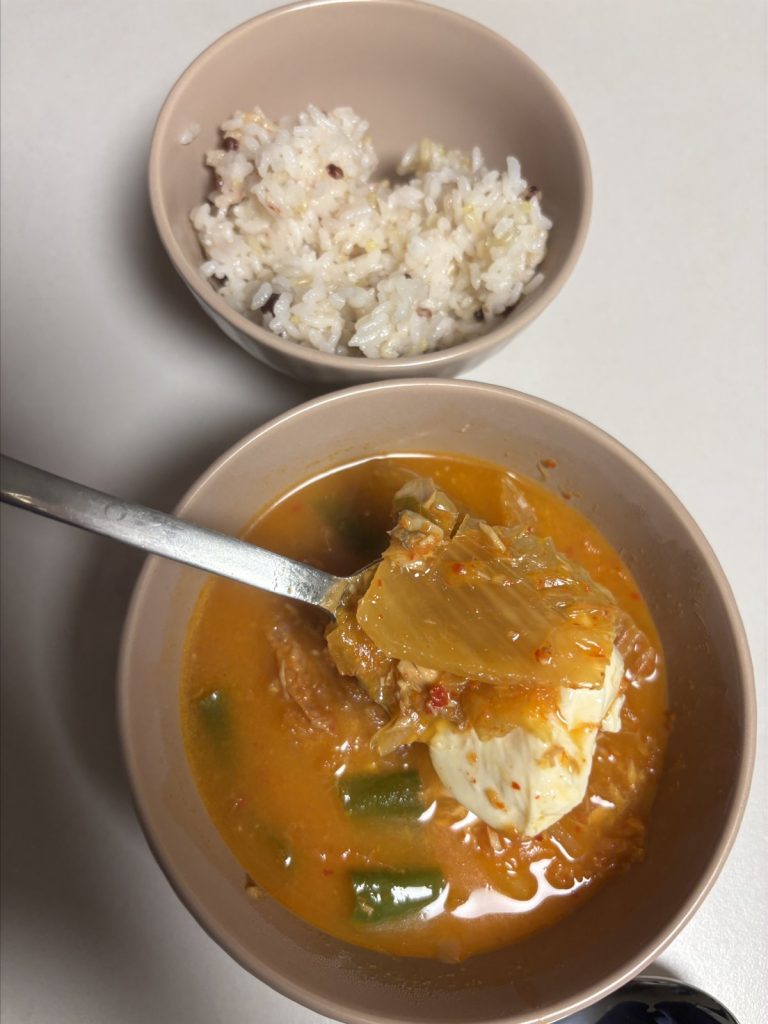
This is the version I actually make at home on weeknights. A can of tuna replaces the pork, so it’s cheaper and faster, and the tuna oil does the job of pork fat. The secret is the same: fry the kimchi properly first. Serves 2–3.
Ingredients
- About 2 cups sour, well-fermented kimchi
- 1 can tuna in oil (100–150 g)
- 500–600 ml water or rice-rinsing water
- 3–4 tbsp kimchi juice
- ½ onion
- ½ green onion (scallion stalk)
- ½ block tofu
- 1 tbsp gochugaru
- 1 tbsp minced garlic
- 1 tbsp soup soy sauce (guk-ganjang) or tuna sauce (chamchi-aek)
- ½ tbsp sugar (recommended if your kimchi is very sour)
Steps
- Put the kimchi in a pot with about 1 tbsp of oil from the tuna can and stir-fry over medium heat for 3–5 minutes.
- Add the gochugaru and garlic and fry for another 30 seconds.
- Add the water and kimchi juice and simmer for 10–15 minutes.
- Add the onion and tuna and cook 5 more minutes. Don’t add the tuna too early or it breaks into tiny flakes.
- Add the tofu and green onion, simmer 2–3 minutes, then season with soup soy sauce or tuna sauce.
Tank’s tips: If your kimchi isn’t sour enough yet, a ½ tbsp of sugar and a longer simmer works better than adding vinegar. If the broth is too sour, add a little more sugar. Missing depth? Add tuna sauce or fish sauce ½ tbsp at a time.
How to serve it
With rice and a rolled omelet or fried egg. It tastes even better the next day.
Can’t find an ingredient? Substitutes
| Ingredient | Best substitute | Note |
|---|---|---|
| Gochugaru (chili flakes) | Aleppo pepper, or 2 parts paprika + 1 part cayenne | Avoid seedy crushed red pepper: too hot and bitter |
| Gochujang (chili paste) | No true substitute | In a pinch: sriracha + a little miso + sugar |
| Doenjang (soybean paste) | Red or brown miso + a splash of soy sauce | Miso is milder and sweeter; use a bit more, skip sugar |
| Asian pear | Bosc pear or a sweet apple (Fuji) | Kiwi works too, but marinate 30 min max |
| Korean radish (mu) | Daikon, or potato in stews | |
| Anchovy-kelp stock | Dashi, light chicken stock, or kelp + shiitake broth | |
| Mirin | Dry white wine + a pinch of sugar |
At an Asian grocery, look for: gochujang from CJ Haechandle (red tub), Chungjungone or Sempio; gochugaru from Chungjungone, Assi or Tae-kyung; Sempio Jin soy sauce; Ottogi sesame oil. Many stores sell pre-sliced “bulgogi beef” and pork shoulder at the meat counter.
Storage
3 days in the fridge. You can freeze it without the tofu.
FAQ
Can I use store-bought kimchi?
Yes. Choose napa cabbage kimchi and let it sour for a few days after opening.
Can I make it vegetarian?
Use vegan kimchi (no fish sauce), skip the pork, and use kelp-shiitake stock with extra mushrooms.