How to read this guide: ✅ means a member said it himself on a show or in an interview, with the source linked. 💬 means it is a fan favorite story or a place reported as a member’s pick, not something we could confirm from his own words. Either way, the food is real, and we tell you how Koreans eat it and where to try it in Seoul.
SEVENTEEN talk about food a lot. Thirteen members, ten-plus years together and a monthly group dinner tradition means a lot of meals on camera. Fans have pieced together who loves what, but much of what circulates online is guesswork. Here is what is confirmed, what is fan lore, and what each dish actually is, from a Korean who eats these foods every week.
Hoshi: kimchi, in any form ✅
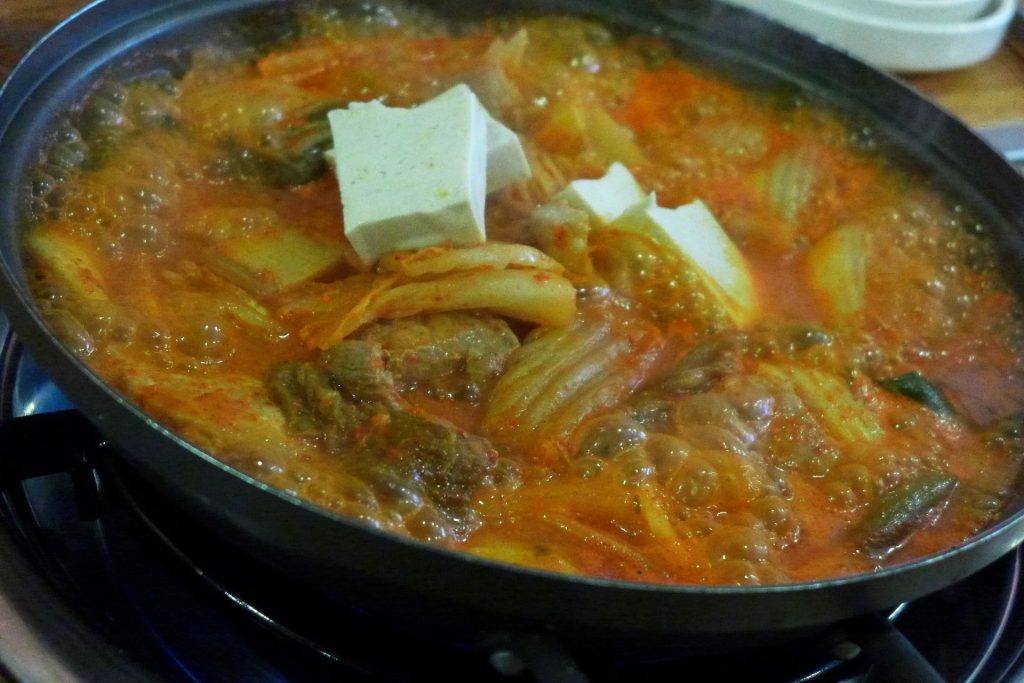
Hoshi is known as a big kimchi fan. When he and Woozi were guests on JTBC’s cooking show Please Take Care of My Refrigerator (aired May 25, 2025), the dish theme he asked the chefs for was a kimchi dish. (Source: Newsinstar)
What a Korean hears: “kimchi dish” usually means kimchi jjigae (김치찌개, kimchi jjigae), the stew almost every Korean grew up on. It tastes best with old, sour kimchi and fatty pork, and it is the default lunch in Korean offices. In Seoul a bowl costs about ₩9,000–11,000 with rice and side dishes.
Woozi: ramyeon, and lots of it ✅
On the same episode, asked about his appetite, Woozi said he needs about six burgers, or four to five packs of ramyeon, to feel full. (Source: Newsinstar)
What a Korean hears: four or five packs is a lot even by Korean standards; one pack is a normal meal. If you want to eat ramyeon like a local, see our guides to ramyeon combos and the spiciest Korean ramyeon.
Seungkwan: Jeju food, especially gogi-guksu ✅
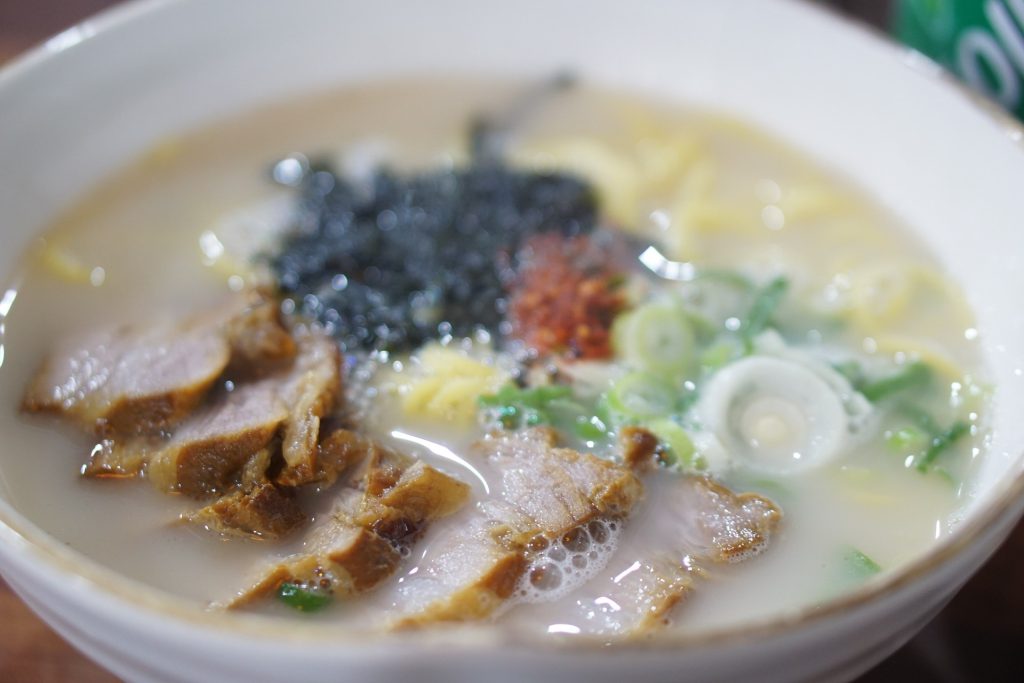
Seungkwan is from Jeju Island and is famously proud of it. In a 2024 interview with Allure Korea, he named Jeju’s delicious food as one of the island’s three best things, and gave fans a very local tip: don’t bother queuing for gogi-guksu, because there are so many good noodle shops on Jeju that you can find a great one without the wait. (Source: Allure Korea)
What a Korean hears: that is exactly what a Jeju local would say. Gogi-guksu (고기국수, gogi-guksu) is thick wheat noodles in a rich pork-bone broth topped with sliced boiled pork. Tourists line up at the famous “noodle street” shops near Jeju City; locals go to whatever shop is near them. A bowl usually costs around ₩10,000–12,000. In Seoul, a few Jeju-style shops serve it too.
💬 Seungkwan’s autograph also hangs at the entrance of REFINE, a Korean fusion restaurant in the Mangwon and Hapjeong area, according to travel platform NOL’s SEVENTEEN foodie guide.
Joshua: Portuguese egg tarts ✅
Joshua brought Portuguese egg tarts from NATA O BICA in Sinsa-dong as dessert when he appeared on Na Yeong-seok’s talk show, and suggested pairing them with whiskey, according to NOL’s SEVENTEEN foodie guide. Egg tarts there run about ₩5,000.
What a Korean hears: egg tarts have had a real boom in Seoul. If you love them, we also wrote about Nata de Nata near Hyehwa, our own favorite.
Dino: gamjatang in Hannam-dong 💬
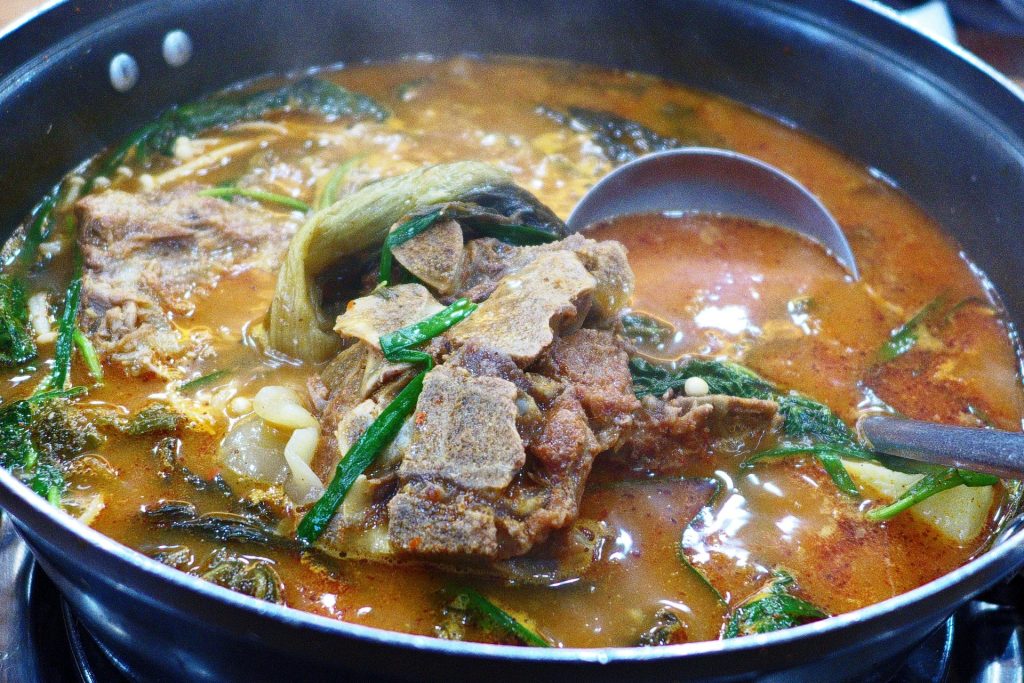
Hannam Dong Gamjatang’s main branch is described as Dino’s favorite spot that he has visited repeatedly, in NOL’s SEVENTEEN foodie guide. It is open 24 hours, and expect to spend about ₩20,000 per person.
What a Korean hears: gamjatang (감자탕, gamjatang) is a spicy stew of pork neck bones, potato, perilla seeds and greens. It is the ultimate late-night and hangover food, which is why so many shops stay open all night. The Korean move: when the meat is gone, ask for fried rice in the leftover broth.
Wonwoo: Rolypoly Cotto in Gangnam 💬
NOL’s guide lists Rolypoly Cotto in Gangnam, a restaurant built around Ottogi products like ramen, curry and pork cutlet, as Wonwoo’s pick, with his autograph near the second-floor counter. Meals run about ₩10,000–30,000.
What a Korean hears: Ottogi is one of Korea’s biggest food brands (Jin Ramen, curry, mayonnaise), so this is basically a stylish restaurant made of Korean supermarket comfort food.
Mingyu: the group’s cook ✅
Mingyu is widely known as SEVENTEEN’s best cook, and has cooked on camera many times, including a convenience store lasagna in a hip hop unit video. (Source: Soompi)
What a Korean hears: “convenience store cooking” is a real Korean hobby: mixing cup noodles, cheese, sausage and rice into new dishes. Try the most famous one, Mark Jeongsik.
The members we have not covered yet
S.Coups, Jeonghan, Jun, DK, The8 and Vernon: we did not find a favorite food we could source well enough yet. We will add them as members talk about food on shows like Mnet Plus’s new K-food talk show IDOL’S TABLE.
A SEVENTEEN food day in Seoul
- Lunch: kimchi jjigae at any office-area restaurant (Hoshi’s pick of a theme).
- Afternoon: Portuguese egg tarts in Sinsa-dong (Joshua).
- Dinner: Ottogi comfort food at Rolypoly Cotto in Gangnam (Wonwoo).
- Late night: gamjatang in Hannam-dong, finishing with fried rice (Dino).
- Trip extension: fly to Jeju for gogi-guksu, and skip the queue like Seungkwan says.
Order like a local
볶음밥 두 개 볶아 주세요.
Bokkeumbap du gae bokka juseyo.
“Please make two portions of fried rice.” Say it at the end of your gamjatang, when the pot is almost empty.
FAQ
What is SEVENTEEN’s favorite food?
As a group, they are known for their monthly dinners together. Individually, the best-sourced favorites are Hoshi’s kimchi dishes, Woozi’s ramyeon, Seungkwan’s Jeju food and Joshua’s egg tarts.
Can I visit restaurants SEVENTEEN went to?
Yes. The Seoul places above are regular restaurants open to everyone. Be polite: don’t ask staff about members or take photos of other diners.
Next: aespa’s favorite Korean foods, from Karina’s puffed rice crackers to Winter’s mala.
Is this information official?
Items marked ✅ come from shows or interviews, linked above. Items marked 💬 come from fan reports and travel guides. Tastes change, so treat them as fun, not facts set in stone. More K-pop food: Stray Kids’ favorite Korean foods.