If you’ve eaten a Korean lunch set (baekban) in Seoul, you’ve probably had jeyuk bokkeum: thin slices of pork stir-fried in a glossy, sweet-spicy gochujang sauce, eaten with rice and lettuce. The name comes from jeoyuk (猪肉), meaning pork, and it’s sometimes called spicy pork bulgogi. It’s one of the easiest Korean dishes to make at home, and it’s on the table in about 25 minutes.
At a glance: Serves 2–3 · Prep 10 min (+30 min optional marinade) · Cook 15 min · About 450–600 kcal per serving without rice · Spice: medium
Ingredients
Main
- 400 g (14 oz) thinly sliced pork shoulder (butt), or half shoulder, half belly
- 1 medium onion (about 150 g), sliced
- 2 scallions, cut into 5 cm (2 in) pieces
- Optional: ½ carrot, sliced, or 1 green chili
- 1 tbsp neutral oil
- 1 tsp toasted sesame seeds
Sauce
- 2½ tbsp gochujang (Korean chili paste)
- 1 tbsp gochugaru (chili flakes); 2 tsp for milder
- 1½ tbsp soy sauce
- 1½ tbsp mirin
- 1 tbsp sugar + 1 tbsp honey or corn syrup
- 1 tbsp minced garlic
- 1 tsp grated ginger
- 1 tbsp sesame oil
- A pinch of black pepper
How to make jeyuk bokkeum
- Slice the pork. If cutting it yourself, freeze it for about an hour, then slice 2–3 mm (⅛ in) thick against the grain.
- Mix the sauce until the gochujang dissolves.
- Marinate. Toss the pork in the sauce. Leave for 30 minutes if you can, or overnight in the fridge.
- Heat the pan. Heat a large skillet or wok over medium-high for 1–2 minutes and add the oil.
- Cook the pork. Spread it in one layer, leave it for a minute, then stir-fry 5–6 minutes until no longer pink. Work in two batches if your pan is small.
- Add the vegetables. Add onion (and carrot) and cook 3–4 minutes, until the sauce turns glossy and clings to the meat. Lower the heat a little if it starts to stick.
- Finish. Add the scallions for 30 seconds. Taste and adjust with a pinch of sugar or a splash of soy. Sprinkle with sesame seeds.
Common mistakes
- Crowding the pan: the pork steams and turns grey. Use high heat and cook in batches.
- Burning the sauce: gochujang has sugar and scorches fast. Turn the heat down once the sauce is in.
- Lean, thick pork: it turns tough. Shoulder with some fat is the move.
- Too much chili flake: it can taste bitter and harsh. Add gradually.
Tank’s tip: Make a double batch of marinated raw pork and freeze half flat in a zip bag. It keeps about a month, and dinner is 15 minutes away.
How to serve it
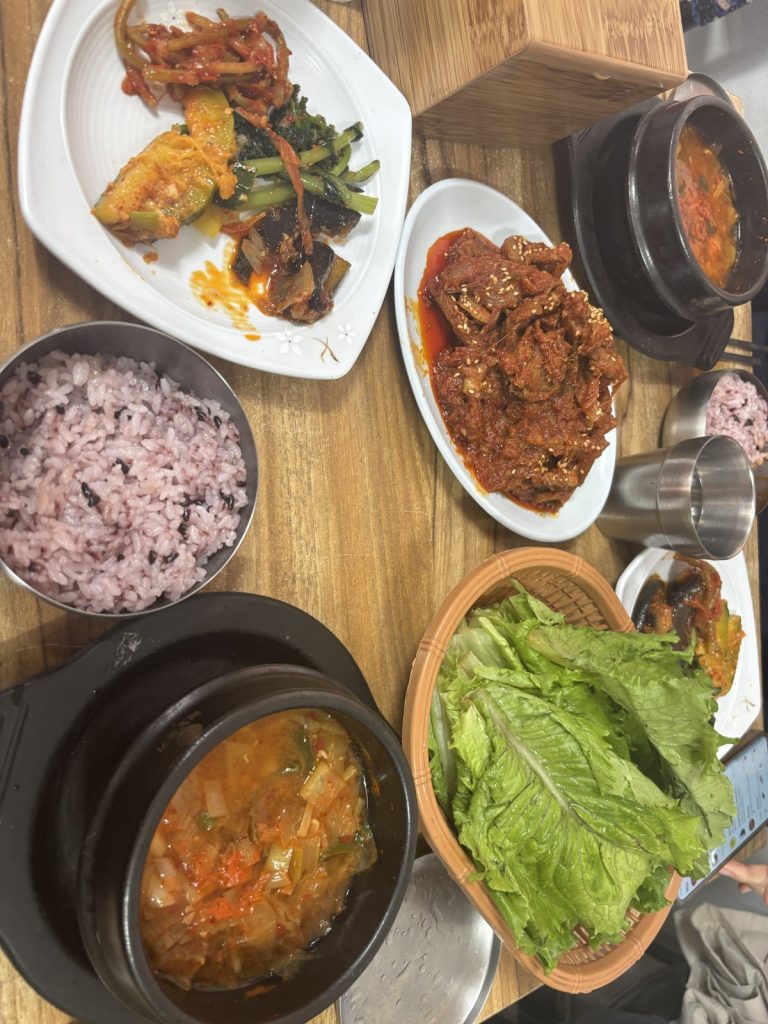
This is how a Seoul restaurant serves it: jeyuk with lettuce wraps, a stew, rice and banchan. That’s Ihwagol in Ikseon-dong, one of my local favorites.

With steamed rice, lettuce or perilla leaves, ssamjang, sliced raw garlic and a soup on the side. Our doenjang jjigae is the classic partner.
Can’t find an ingredient? Substitutes
| Ingredient | Best substitute | Note |
|---|---|---|
| Gochugaru (chili flakes) | Aleppo pepper, or 2 parts paprika + 1 part cayenne | Avoid seedy crushed red pepper: too hot and bitter |
| Gochujang (chili paste) | No true substitute | In a pinch: sriracha + a little miso + sugar |
| Doenjang (soybean paste) | Red or brown miso + a splash of soy sauce | Miso is milder and sweeter; use a bit more, skip sugar |
| Asian pear | Bosc pear or a sweet apple (Fuji) | Kiwi works too, but marinate 30 min max |
| Korean radish (mu) | Daikon, or potato in stews | |
| Anchovy-kelp stock | Dashi, light chicken stock, or kelp + shiitake broth | |
| Mirin | Dry white wine + a pinch of sugar |
At an Asian grocery, look for: gochujang from CJ Haechandle (red tub), Chungjungone or Sempio; gochugaru from Chungjungone, Assi or Tae-kyung; Sempio Jin soy sauce; Ottogi sesame oil. Many stores sell pre-sliced “bulgogi beef” and pork shoulder at the meat counter.
Storage
Cooked: up to 3 days in the fridge; reheat in a pan. Raw marinated: 1–2 days in the fridge or about a month in the freezer.
FAQ
Is jeyuk bokkeum very spicy?
Medium. Halve the gochugaru for a milder version; the gochujang alone is more sweet-savory than hot.
What’s the difference between jeyuk bokkeum and bulgogi?
Jeyuk is pork in a spicy gochujang sauce. Classic bulgogi is beef in a sweet soy marinade. See our bulgogi recipe.