
Quick answer: Before Korea’s college entrance exam, the Suneung (수능, Suneung), people give students sticky foods like yeot (taffy) and chapssaltteok (sticky rice cakes). In Korean, “to stick” (붙다, butda) also means “to pass an exam,” so sticky food means “stick to the university you want.” In 2026 the exam is on Thursday, November 19.
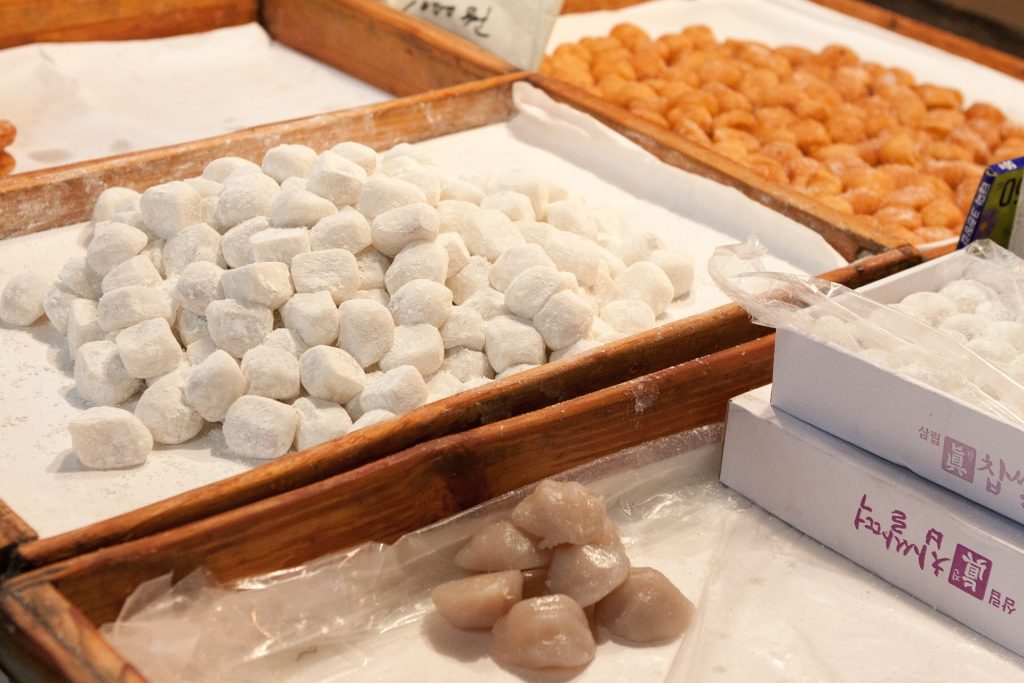
Every November, Korean bakeries, rice-cake shops and convenience stores fill up with gift boxes of taffy, sticky rice cakes and some very odd presents, like forks and toilet paper. If you watch K-dramas, you have probably seen a parent pressing taffy into a student’s hand on exam morning. Here is what all of it means, and why one popular Korean soup is off the menu that week.
What the Suneung is
The Suneung (College Scholastic Ability Test) is the one-day exam that decides which university most Korean high school seniors get into. It runs from early morning to early evening, and for many families it is the biggest day of the school years. The whole country quietly adjusts around it.
In recent years, many offices and the stock market have opened an hour later on exam day so students can get to their test sites, and planes stop taking off and landing during the English listening section so the noise does not reach exam rooms. Police officers sometimes give late students a ride on their motorbikes, and that usually makes the evening news.
The sticky foods: why they work
Korean has a handy double meaning. 붙다 (butda) means “to stick,” and 시험에 붙다 (siheome butda) means “to pass an exam.” So anything sticky becomes a good-luck charm.
| Food | What it is | The wish |
|---|---|---|
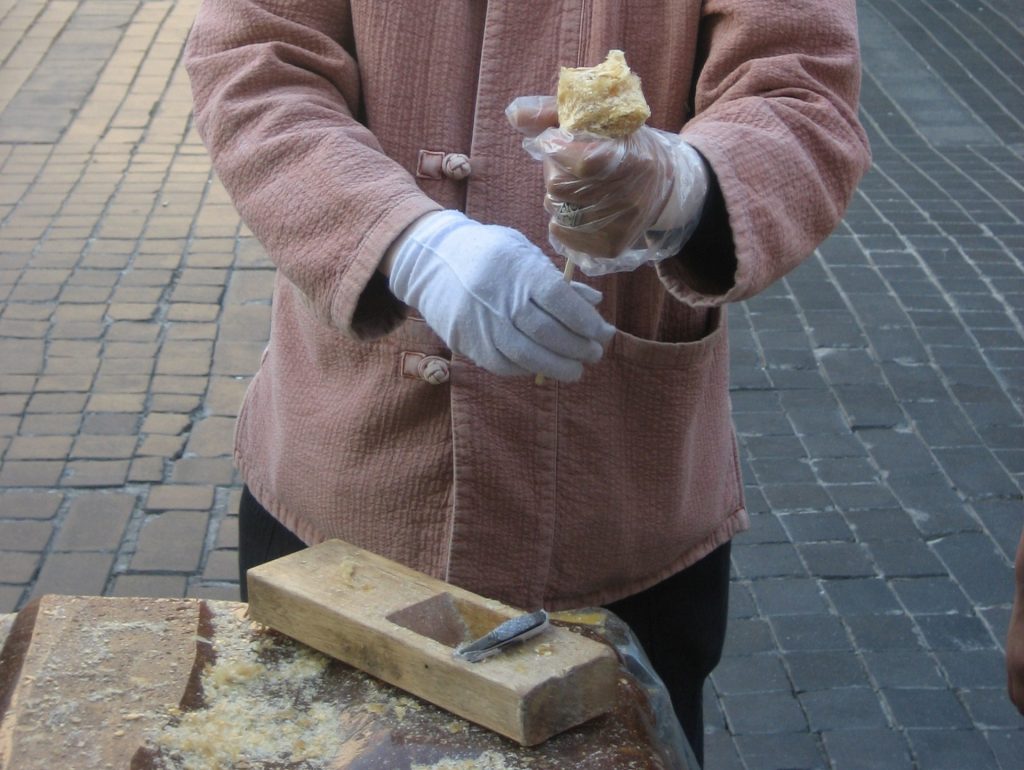
| Yeot 엿 (yeot) | Chewy, sticky taffy made from rice and malt | “Stick” to your first-choice university |
| Chapssaltteok 찹쌀떡 (chapssaltteok) | Soft glutinous rice cake, usually filled with sweet red bean | Same idea: stick and pass |
| Hapgyeok yeot 합격엿 (hapgyeok-yeot) | Gift-boxed taffy labeled “pass” (합격) | Pass, said very directly |

A classic image is parents sticking pieces of yeot onto the school gate the week before the exam. You will see it less in big Seoul schools now, but it is still a well-known custom, and the gift boxes are everywhere.
The strange gifts, explained
These only make sense if you know the Korean wordplay. Each object is a pun on a verb students want to do well on exam day.
| Gift | Korean pun | Meaning |
|---|---|---|
| Fork | 찍다 (jjikda): to stab, and to guess an answer | “Guess right on the questions you don’t know” |
| Toilet paper or tissues | 풀다 (pulda): to unroll, and to solve | “Solve every problem smoothly” |
| Mirror | 보다 (boda): to look, and to take a test | “Do well on the test” |
What Koreans avoid eating
Miyeokguk (미역국), seaweed soup. Korean slang says 미역국을 먹다 (miyeokgugeul meokda, “to eat seaweed soup”) when someone fails an exam. Seaweed is slippery, and slipping is the opposite of sticking. Most families quietly skip it in exam week, even though it is a normal everyday soup the rest of the year (and the classic birthday soup).
On the exam day itself, parents usually pack a warm, simple lunch the student is already used to: rice porridge (죽, juk), mild soup, rice and familiar side dishes in a thermos box. Nothing spicy, greasy or new. Nobody wants a stomach surprise during math.
If you are in Korea on November 19, 2026
- Morning traffic near high schools is busy, and you may see younger students cheering outside exam sites with signs and drums.
- Some offices and services start later than usual, and flights may pause briefly in the early afternoon during the listening section.
- After the exam, many restaurants, cinemas and shops run discounts for students who show their exam ticket (수험표, suheompyo). Expect busy restaurants that evening and weekend.
- Rice-cake shops (떡집, tteokjip), bakeries and convenience stores sell yeot and chapssaltteok gift boxes from late October. They also make good, very Korean souvenirs.
Order like a local
합격엿 있어요?
Hapgyeok-yeot isseoyo?
“Do you have exam-luck taffy?”
수능 대박!
Suneung daebak!
“Ace the Suneung!” This is what Koreans say to a student taking the exam. Saying it to a Korean teenager you know will earn you a big smile.
FAQ
When is the Suneung in 2026?
Thursday, November 19, 2026, for the 2027 university admission year.
Can I buy yeot and chapssaltteok as a visitor?
Yes. Traditional markets, rice-cake shops and department store food halls sell both, and convenience stores carry exam gift sets in November. Chapssaltteok is best eaten within a day or two.
Why do Koreans eat seaweed soup on birthdays but avoid it before exams?
Birthday seaweed soup is about mothers and new life: it is the soup women traditionally eat after giving birth. The exam taboo is pure wordplay about slipping. Same soup, two very different meanings.
More Korean food customs: our Pepero Day guide covers the other big November food day, and our Korean phrase cards help you order at any rice-cake shop.