“How much should I budget for food in Seoul?” is one of the most common questions on travel forums, and most answers are guesses. This guide uses official 2026 price data from the Korea Consumer Agency, which tracks average restaurant prices in Seoul every month, plus real 2026 prices for coffee, street food, chicken and drinks.
Quick answer: A typical Korean lunch costs ₩8,000–13,000 in Seoul. Budget travelers can eat well on ₩25,000–40,000 a day; mid-range is ₩60,000–100,000. There’s no tipping and no service charge at normal restaurants.
Want your own number? Try our free Korea food budget calculator: pick your eating style and see your daily and total cost in your currency.
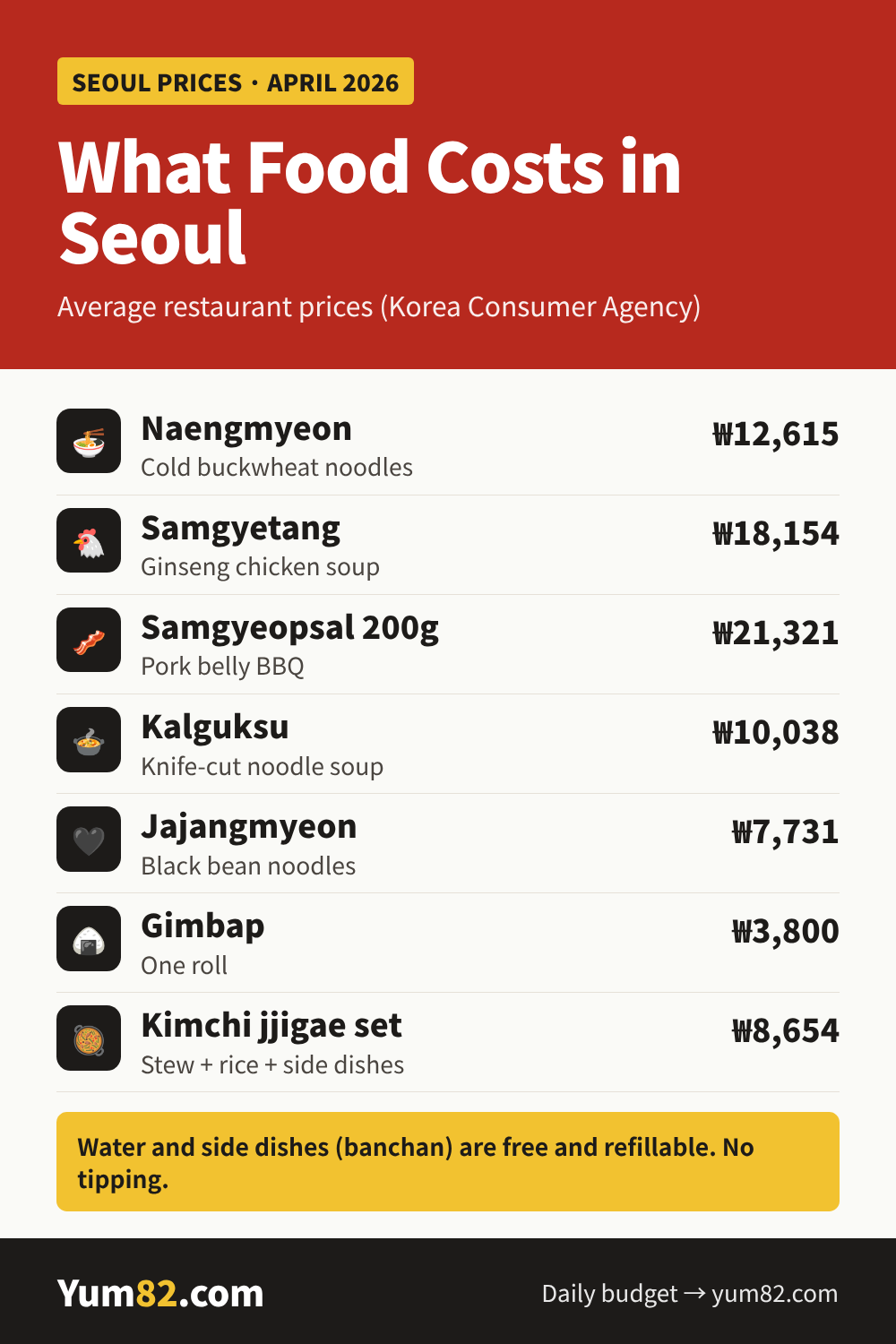
Official average prices in Seoul (July 2026)

| Dish | Average price in Seoul | Roughly in USD* |
|---|---|---|
| Gimbap (1 roll) | ₩3,869 | $2.80 |
| Jajangmyeon (black bean noodles) | ₩7,654 | $5.50 |
| Kimchi jjigae set meal (baekban) | ₩8,654 (Aug: ₩8,769) | $6.30 |
| Kalguksu (knife-cut noodle soup) | ₩10,038 | $7.30 |
| Bibimbap | ₩11,769 | $8.50 |
| Naengmyeon (cold noodles) | ₩12,692 | $9.20 |
| Samgyetang (ginseng chicken soup) | ₩18,192 | $13 |
| Samgyeopsal (pork belly, 200 g) | ₩21,321 | $15.50 |
2026 price tracker: how Seoul prices moved
Latest (September 2026): a gimbap roll averaged ₩3,923 in Seoul, up 8.3% from ₩3,623 a year earlier, and bibimbap hit ₩12,000, up 3.7% (Financial News, October 2026). Here is how the Korea Consumer Agency’s Seoul averages have moved through 2026:
| Dish (Seoul average) | April 2026 | July 2026 | September 2026 |
|---|---|---|---|
| Gimbap | ₩3,800 | ₩3,869 | ₩3,923 |
| Bibimbap | — | ₩11,769 | ₩12,000 |
| Naengmyeon | ₩12,615 | ₩12,692 | — |
| Samgyetang | ₩18,154 | ₩18,192 | — |
| Samgyeopsal (200 g) | ₩21,321 | ₩21,321 | — |
| Jajangmyeon | ₩7,731 | — | — |
| Kimchi jjigae set | ₩8,654 | — | — |
| Kalguksu | ₩10,038 | — | — |
Source: Korea Consumer Agency dining-out price survey for Seoul, July 2026 (kimchi jjigae also August 2026). *USD is a rough conversion for orientation only; check the current exchange rate.
Interesting detail: Seoul’s average kimchi jjigae set (₩8,769 in August 2026) is now below the national average (₩9,080), while noodles and samgyeopsal are still more expensive in Seoul.
Coffee
| Where | Iced Americano |
|---|---|
| Starbucks Korea (tall) | ₩4,700 |
| Mega MGC Coffee | ₩2,000 (hot ₩1,700) |
| Compose Coffee | ₩1,800 (hot ₩1,500) |
Korea’s budget coffee chains are everywhere and cost less than half of Starbucks. Good news if you drink two coffees a day.
Street food and convenience stores
| Item | Typical price |
|---|---|
| Tteokbokki (cup or plate) | ₩3,000–5,000 |
| Hotteok (sweet pancake) | ₩1,500–3,000 |
| Fish cake skewer | ₩1,000–2,000 |
| Egg bread | ₩2,000–3,000 |
| Convenience store meal | ₩5,000–8,000 |
Tourist hotspots like Myeongdong charge more. See our Myeongdong street food prices and Gwangjang Market guide.

The cheapest full meal in Korea is still the convenience store. Our convenience store food guide has every price.
Chicken, BBQ and drinks
- Korean fried chicken: ₩20,000–25,000 for a whole chicken from a big brand. Delivery apps often charge ₩2,000–3,000 more than the store price.
- Korean BBQ: about ₩21,000 per 200 g of pork belly, usually with a 2-serving minimum. See our Korean BBQ guide.
- Soju or beer at a restaurant: ₩5,000–7,000 a bottle (more in Gangnam). At a convenience store, soju is about ₩1,900.
Fine dining
Michelin-starred tasting menus in Seoul run roughly ₩150,000–450,000+ per person. Bib Gourmand restaurants are a far cheaper way to eat Michelin-recommended food. See our Michelin + CatchTable guide.
Daily food budget in Seoul (2026)
| Style | Per person per day | What it looks like |
|---|---|---|
| Budget | ₩25,000–40,000 | Convenience store breakfast, ₩9,000–12,000 set lunch, street food, ₩2,000 coffee |
| Mid-range | ₩60,000–100,000 | Café coffee, ₩10,000–13,000 lunch, BBQ dinner with soju |
| Splurge | ₩150,000–500,000+ | Hanwoo beef dinner or a Michelin tasting menu |
Money-saving tips
- Eat your main meal at lunch: many restaurants have cheaper lunch sets.
- Side dishes (banchan) and water are free and refillable.
- Order fried chicken in person rather than through a delivery app.
- Use budget coffee chains (Mega, Compose, Paik’s).
- No tipping, ever. See Korean restaurant etiquette.
Cash for markets and street food: where to exchange money
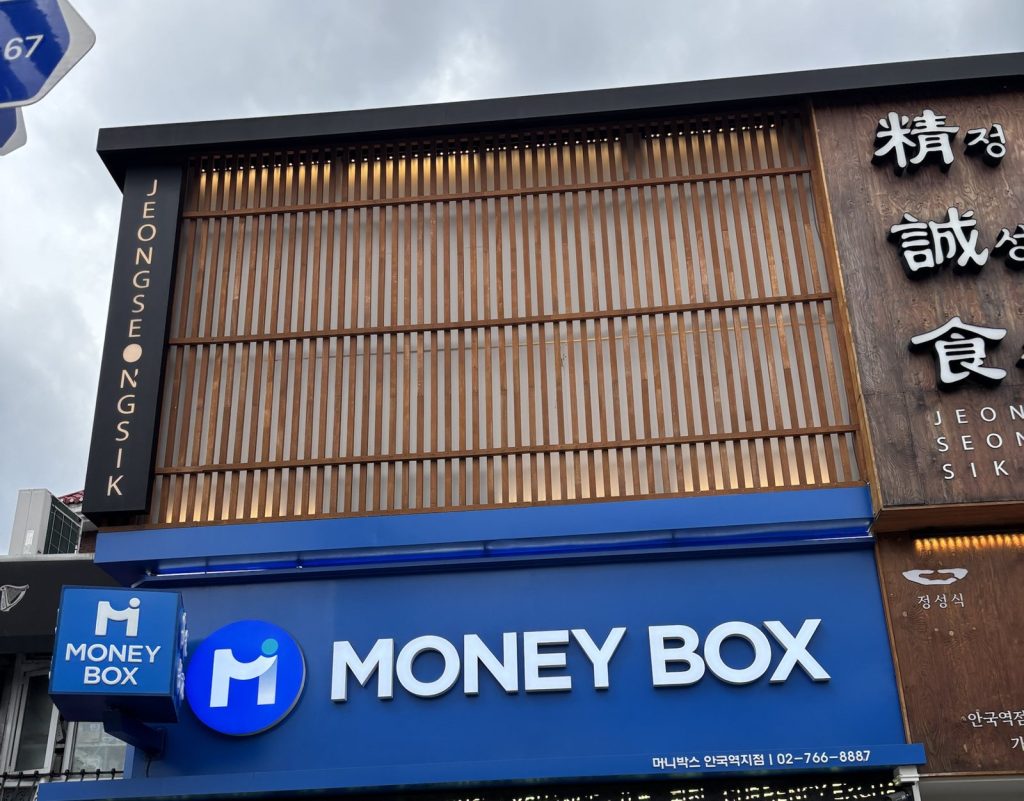
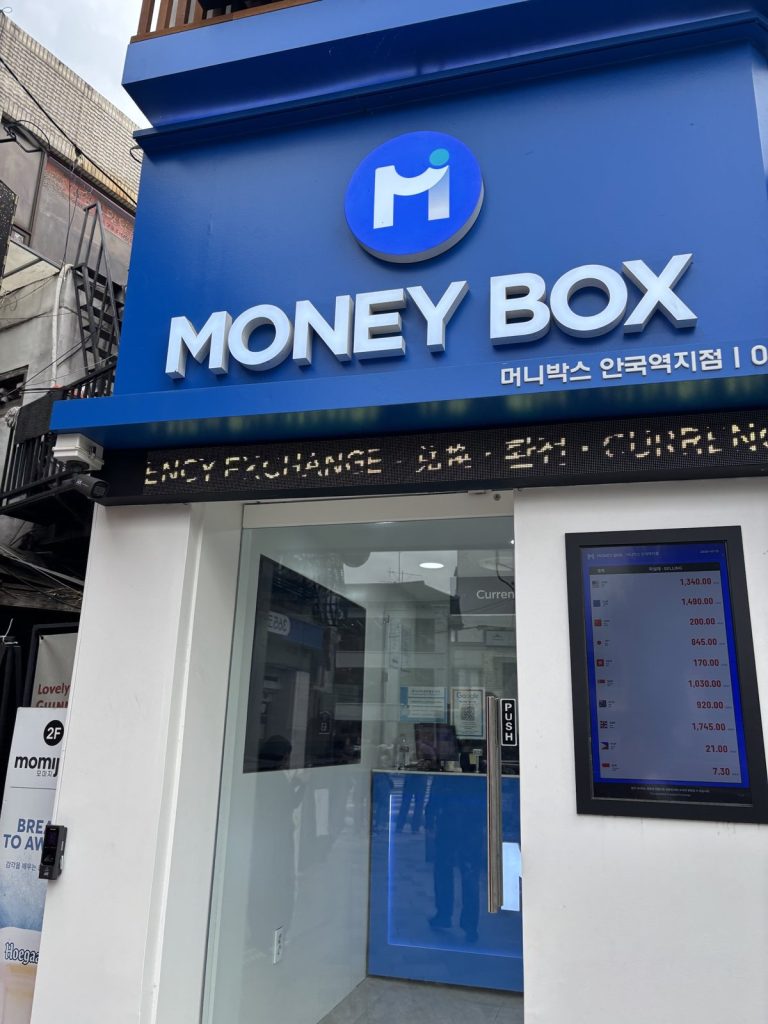
Cards work in almost every restaurant and convenience store, but traditional markets, street-food carts and winter snack stalls (bungeoppang, hotteok, roasted sweet potatoes) often want cash. Plan on ₩30,000–50,000 in notes for a market day. The airport and hotel counters usually give the worst rates. Private money changers in tourist areas usually beat them, and blue Money Box (머니박스) branches have been popping up all over Seoul. For cards, kiosks and T-money, see how to pay for food in Korea.
Tank’s take: I’ve found Money Box’s exchange fees cheaper than even the banks. If you need won in Korea, give it a try. The rate screen by the door shows that day’s rates, so you can compare before you walk in. (Not sponsored, I just use it.)
Where Koreans Eat Cheap
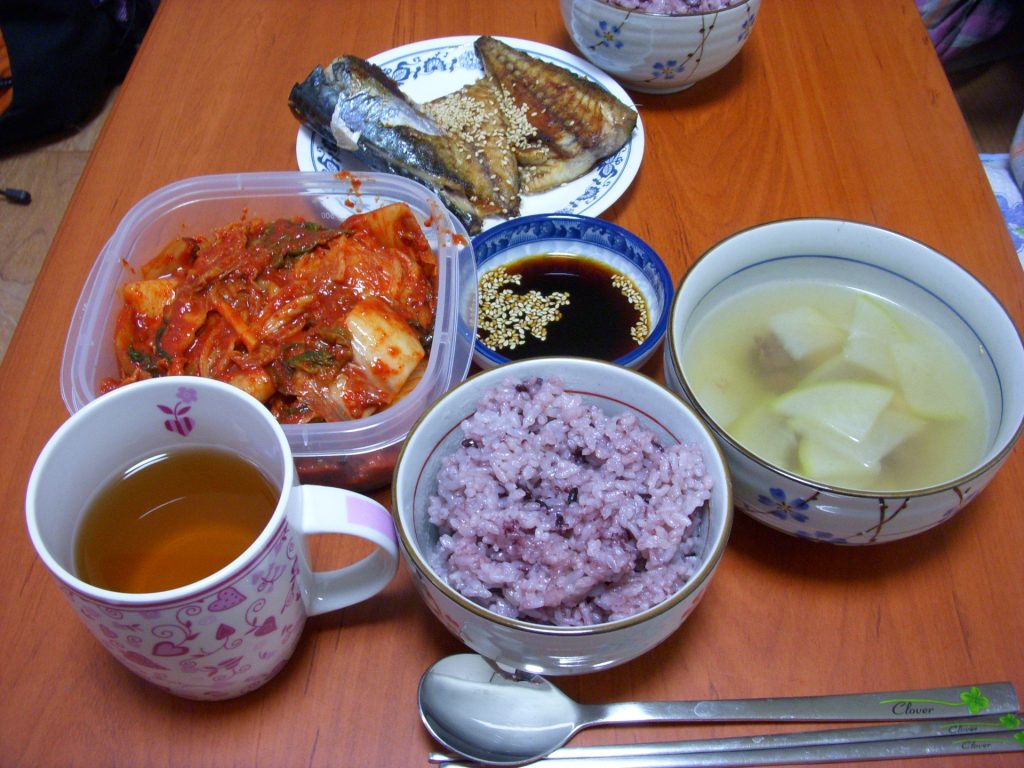
- Baekban (백반): home-style set meals of rice, soup and several side dishes, usually around ₩9,000–11,000 in Seoul. Look for small places near offices and markets with the menu written on the wall.
- Gisa sikdang (기사식당): “driver’s restaurants” built for taxi drivers. Fast, generous and cheap, with big parking lots out front.
- Gimbap chains like Gimbap Cheonguk: a full meal for under ₩10,000. See our Korean chains guide.
- University cafeterias: many are open to visitors and are among the cheapest hot meals in the city.
Order like a local
1인분도 돼요?
Irinbun-do dwaeyo?
“Can I order for one person?” Many BBQ and stew restaurants require at least two portions. Ask before you sit down.
공깃밥 추가요.
Gonggitbap chuga-yo.
“One more bowl of rice, please.” Usually ₩1,000–2,000 extra.
Catching a KTX or the airport train? See what station food costs in our Seoul Station food guide.
Traveling solo? See which meals are easiest on your own, and how to get Korean BBQ for one, in our guide to eating alone in Korea.
Keep exploring: Korean all-you-can-eat buffets.
FAQ
Is food expensive in Seoul?
Everyday Korean food is affordable: most single dishes cost ₩8,000–13,000. BBQ, imported goods and fruit are where it gets pricey.
Do I need cash for food in Seoul?
Cards work almost everywhere. Carry some cash (₩30,000–50,000) for traditional markets and street stalls. Exchange it at a private money changer such as Money Box rather than at the airport; see where to exchange money above.
How much should I budget for food in Seoul per day?
Budget travelers can eat well on ₩25,000–40,000 a day; mid-range is ₩60,000–100,000.
How much does lunch cost in Seoul?
A typical Korean lunch costs ₩8,000–13,000 in Seoul.
Do you tip at restaurants in Korea?
No. There’s no tipping and no service charge at normal restaurants.