You’ll see Starbucks and McDonald’s everywhere in Seoul, but Koreans spend most of their everyday food money at homegrown chains you’ve probably never heard of. They’re cheap, fast, consistent, and some are genuinely better than the global brands.

Here are the Korean chains worth trying, what to order at each, and 2025–2026 prices, so you know what a fair price looks like.
Quick picks: Breakfast at Isaac Toast, lunch at Mom’s Touch (Korea’s favorite chicken burger), fried chicken from Kyochon or bhc, spicy tteokbokki at Yupdduk, bingsu at Sulbing, and a ₩2,000 iced Americano from Mega Coffee.
| Chain | What it is | Typical price |
|---|---|---|
| Kuukuu | Sushi & seafood buffet | ₩23,900–34,900 |
| Isaac Toast | Breakfast toast sandwiches | about ₩4,500–5,000 |
| Mom’s Touch | Chicken thigh burgers | ₩5,200 (Thigh Burger) |
| Lotteria | Korean burger chain | ₩5,100 (Bulgogi Burger) |
| Kyochon / bhc / BBQ | Korean fried chicken | about ₩22,000–24,500 per chicken |
| Norang Tongdak | Crispy old-style fried chicken | about ₩21,000–24,000 |
| Yupdduk | Very spicy tteokbokki | ₩14,000 (serves 2–3) |
| Sinjeon Tteokbokki | Cheap takeaway tteokbokki | ₩4,000 |
| Dookki | Tteokbokki buffet | ₩11,900 (90 min) |
| Bonjuk | Rice porridge | ₩10,000–17,500 |
| Hansot | Takeaway lunchboxes | ₩3,900–6,000 |
| Gimbap Cheonguk | 24-hour Korean diner | ₩2,500–7,000 |
| Myungrang Hotdog | Korean corn dogs | ₩2,000–2,900 |
| Sulbing | Bingsu (shaved ice) | ₩10,900–17,500 |
| Mega / Compose / Paik’s | Budget coffee | ₩1,500–2,000 |
Buffets
Kuukuu (쿠우쿠우): Sushi Buffet
Korea’s most popular sushi and seafood buffet chain, with about 90 stores and roughly 120 dishes. Locals go for birthdays and big appetites.
- Regular branches: weekday lunch ₩23,900, weekday dinner ₩28,900, weekends ₩31,900
- “Gold” branches cost about ₩3,000 more, with extras like grilled-eel sushi
- Tip: weekday lunch saves about ₩8,000
Dookki (두끼): Tteokbokki Buffet
Build your own tteokbokki at the table from a bar of rice cakes, noodles, fish cakes, sauces, and fried snacks, then finish with fried rice in the same pan.
- Adults ₩11,900, all day, 90-minute limit
- Great for groups who can’t agree on spice level
Burgers and Breakfast
Isaac Toast (이삭토스트)
Korea’s iconic breakfast sandwich: buttery toasted bread, egg, ham or bacon, and a secret sweet sauce. The Myeongdong branch always has a line of tourists.
- Ham Special about ₩4,500, Bacon Best about ₩5,000
- Order at the kiosk; most stores have one
Mom’s Touch (맘스터치)
Korea’s favorite chicken burger chain, with over 1,400 stores. The Thigh Burger (싸이버거) uses a juicy fried chicken thigh and is better than most global chains’ chicken sandwiches.
- Thigh Burger ₩5,200 (since March 2026)
Lotteria (롯데리아)
Korea’s own fast food chain. Order the Bulgogi Burger, a sweet soy-marinated patty you won’t find at McDonald’s back home.
- Ria Bulgogi and Ria Shrimp burgers ₩5,100 (since May 2026)
Korean Fried Chicken
Kyochon, bhc, and BBQ
The big three of Korean fried chicken. A whole chicken feeds two, and the classic pairing is cold beer (chimaek).
- Kyochon Honey Combo: about ₩23,000 (Kyochon is known for its soy-garlic and honey glazes)
- bhc Purinkle (뿌링클, cheese-powder chicken): ₩23,000
- BBQ Golden Olive: ₩23,000; yangnyeom (sweet-spicy) ₩24,500
- Tip: prices in delivery apps are often higher than in the store
Norang Tongdak (노랑통닭)
Thin, extra-crispy, old-school market-style fried chicken.
- Signature chicken about ₩24,000
Tteokbokki and Street Snacks
Yupdduk (동대문 엽기떡볶이)
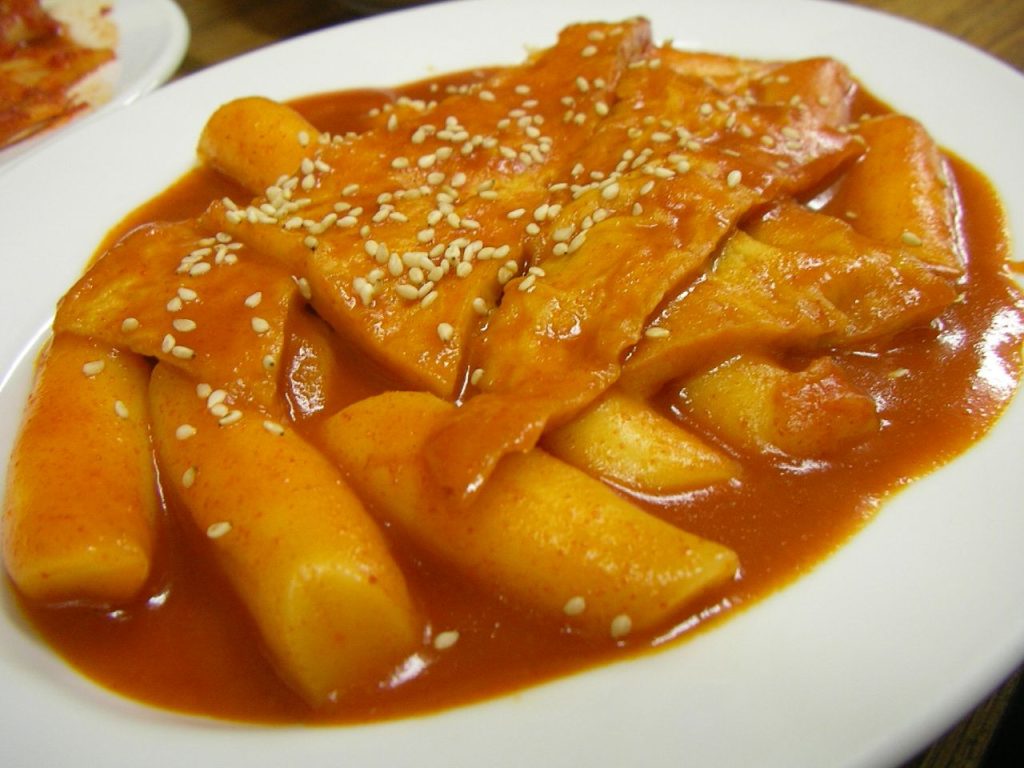
Famous for brutally spicy tteokbokki that Koreans order as a challenge. One order easily feeds two or three.
- Original ₩14,000; rosé and mala versions ₩16,000
- Choose the mildest level if you’re not used to Korean spice
Sinjeon Tteokbokki (신전떡볶이)
Cheap, addictive takeaway tteokbokki, one of the biggest tteokbokki chains by store count.
- Basic tteokbokki ₩4,000; cheese or rosé ₩6,000
Myungrang Hotdog (명랑핫도그)
Korean corn dogs coated in rice batter, often with mozzarella inside, rolled in sugar and drizzled with sauces.
- Original about ₩2,000, mozzarella about ₩2,900
Quick Korean Meals
Gimbap Cheonguk (김밥천국)
A 24-hour diner chain with a huge wall menu of cheap Korean dishes. Each store sets its own prices.
- Basic gimbap about ₩2,500–3,500, main dishes about ₩6,000–7,000
- Classic cheap meal: gimbap + ramyeon
- Menus are usually Korean only; use a photo-translation app
Bonjuk (본죽)
Rice porridge chain with over 1,000 stores. Koreans eat juk when they’re sick or hungover, but it’s a comforting meal anytime.
- Vegetable porridge ₩10,000; abalone porridge ₩17,500
Hansot (한솥도시락)
Takeaway lunchbox chain with about 800 stores. Cheap, filling, and fast.
- Chicken Mayo rice bowl ₩3,900; kimchi stew lunchbox ₩6,000
Desserts and Coffee
Sulbing (설빙)
Korea’s best-known bingsu chain. The Injeolmi bingsu, topped with roasted soybean powder and rice cake, is the classic.
- Injeolmi bingsu ₩10,900; Apple Mango Cheese ₩15,500
- One bowl is enough for two
Mega Coffee, Compose, and Paik’s Coffee
Korea’s budget coffee chains are on almost every corner, selling large iced Americanos for about a third of Starbucks prices.
- Mega Coffee: iced Americano ₩2,000 (24 oz), about 3,500 stores
- Compose: iced ₩1,800, hot ₩1,500
- Paik’s Coffee: iced ₩2,000, hot ₩1,700
Bakeries
Paris Baguette (about 3,400 stores) and Tous les Jours (about 1,300) are both Korean companies. Their Korean menus are much bigger than their overseas stores, with sweet potato bread, red bean breads, and seasonal cakes.
Tips for Ordering
- Kiosks are everywhere. Many have an English option, but some only accept Korean cards; if your card fails, order at the counter.
- Eat-in vs takeout: the kiosk often asks first. 매장 (maejang) = eat in, 포장 (pojang) = takeout.
- Delivery apps cost more than ordering in the store.
- Prices rise often: many chains raised prices in 2025–2026, so expect small differences.
Craving more? See our convenience store food combos or Seoul’s legendary old-school restaurants.
Prices are in-store prices reported in 2025–2026 and may vary by branch. Last checked: October 2026.
Sources
- Banksalad: Kuukuu prices (Korean)
- ZDNet Korea: Mom’s Touch price (Korean)
- Newspim: Lotteria price (Korean)
- Hankyung: Kyochon prices (Korean)
- NewDaily: Norang Tongdak prices (Korean)
- Seoul Economic Daily: Yupdduk (Korean)
- Herald: Sinjeon Tteokbokki (Korean)
- Seoul Economic Daily: Hansot (Korean)
- NewDaily: Mega Coffee prices (Korean)
- CEO Score Daily: Bakery chains (Korean)