Every autumn, Seoul’s sidewalks turn yellow with ginkgo leaves, and Korean kitchens fill with a small green snack: eunhaeng (은행), ginkgo nuts. They are chewy, a little bitter, and very addictive. Here is how I peel them in about a minute, and why you should stop at a handful.
Quick answer: Eunhaeng (은행) are ginkgo nuts, a classic Korean autumn snack. The easy way to crack them: put them in an empty paper milk carton and microwave for about 1 minute, then peel. Always eat them cooked, and keep it small: Korea’s Ministry of Food and Drug Safety says no more than 10 a day for adults and 2–3 for children. I stick to about 7.
What is eunhaeng?
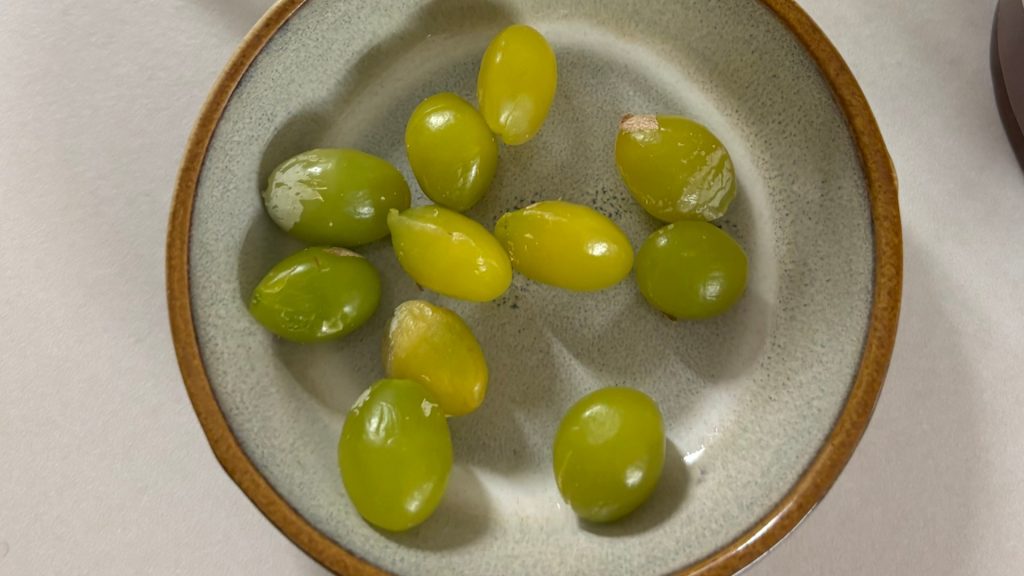
Eunhaeng (은행) is the Korean word for ginkgo nuts. Ginkgo is one of Korea’s most common street trees: about 106,000 line Seoul’s streets, and nationwide they make up 12 percent of the 8.25 million street trees, according to the Korea Forest Service figures reported by The Korea Times. Only female trees produce the nuts, and the fallen fruit is famous for its strong smell, so city governments collect them early in the season (The Korea Times).
Inside the hard shell is a soft nut that turns bright green to yellow when cooked. Koreans roast them in a pan, add them to rice and porridge, or just snack on them warm after dinner.
The milk carton trick: peel ginkgo nuts in 1 minute
- Put the ginkgo nuts, still in their shells, into an empty paper milk carton.
- Microwave for about 1 minute. The shells crack open from the heat.
- Peel off the cracked shell and the thin brown skin. The nuts inside come out green and chewy.
Use a regular refrigerated paper milk carton, not a shelf-stable carton with a foil lining, because foil should never go in a microwave.
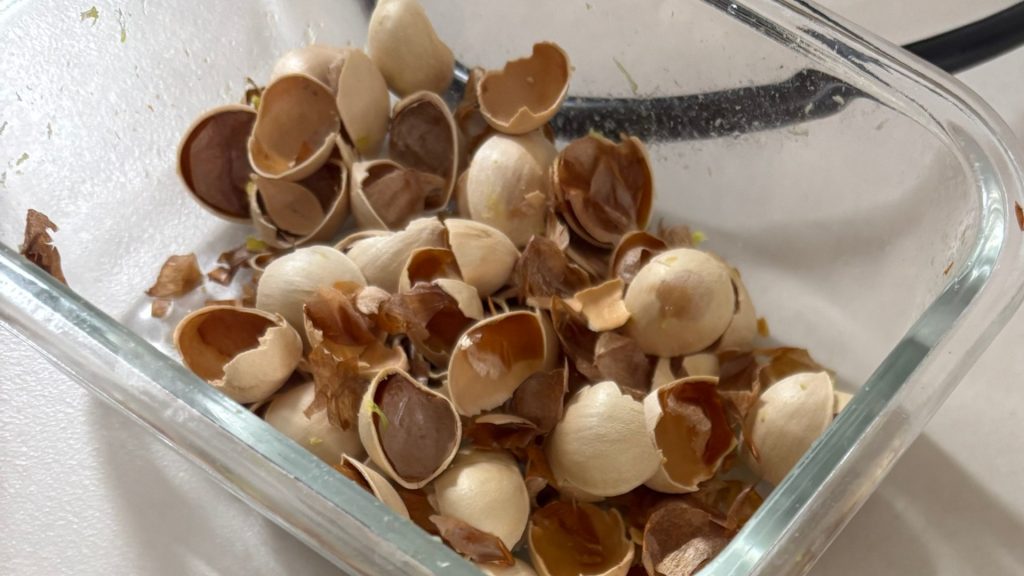
Tank’s note: Ginkgo nuts are Koreans’ snack. Put them in an empty milk carton and microwave for about 1 minute, and they become really easy to peel. They’re delicious, but eat only about 7 a day to enjoy them in a healthy way.
How many ginkgo nuts can you eat a day?
Ginkgo nuts contain a toxic substance called methylpyridoxine along with cyanogenic glycosides, so Korea’s Ministry of Food and Drug Safety says to always eat them cooked and limit them to 10 a day for adults and 2–3 a day for children (Ministry of Food and Drug Safety via Korea.kr). That is why Korean families serve them a few at a time, not by the bowl.
Looking for more Korean snacks? See my Korean convenience store food guide, or the home-style dishes in what Koreans eat for jesa.
Order like a local
| Korean | Romanization | English |
|---|---|---|
| 은행 있어요? | Eunhaeng isseoyo? | Do you have ginkgo nuts? |
| 은행 구이 하나 주세요. | Eunhaeng gui hana juseyo. | One order of roasted ginkgo nuts, please. |
| 깐 은행 있어요? | Kkan eunhaeng isseoyo? | Do you have peeled ginkgo nuts? |
| 하루에 몇 개 먹어도 돼요? | Harue myeot gae meogeodo dwaeyo? | How many can I eat a day? |
Keep exploring: more cold-weather snacks are in my Korean winter street food guide. November is also kimjang, kimchi-making season, and for what else is in season, see the Korean fruits guide.
FAQ
What is eunhaeng in Korean food?
Eunhaeng (은행) is the Korean word for ginkgo nuts. Koreans roast them in a pan, add them to rice and porridge, or just snack on them warm after dinner.
How do you peel ginkgo nuts easily?
Put the ginkgo nuts, still in their shells, into an empty paper milk carton and microwave for about 1 minute. The shells crack open from the heat, so you can peel off the shell and the thin brown skin.
How many ginkgo nuts can you eat a day?
Korea’s Ministry of Food and Drug Safety says to always eat them cooked and limit them to 10 a day for adults and 2–3 a day for children. I stick to about 7.
Can you eat ginkgo nuts raw?
No. Ginkgo nuts contain a toxic substance called methylpyridoxine, so Korea’s Ministry of Food and Drug Safety says to always eat them cooked.
Sources
- Ministry of Food and Drug Safety (Korea.kr): ginkgo nuts must be cooked; up to 10 a day for adults, 2–3 for children
- The Korea Times: Local governments conduct fight against smell of ginkgo nuts (Oct 2021)
- Method and photos: Tank Lee, November 2026