Want to eat where Seoul’s grandparents ate? Skip the Instagram cafés and look for a nopo (노포): an old, often family-run restaurant that has served the same few dishes for decades. The menus are short, the décor hasn’t changed since your parents were born, and the food is the reason locals still line up.
Quick answer: The oldest is Imun Seolnongtang (ox-bone soup, since 1904). Other legends: Hadongkwan for gomtang (since 1939), Woo Lae Oak for Pyongyang naengmyeon (since 1946) and Cheongjinok for haejangguk (since 1937). Avoid weekday lunch from 12:00 to 1:00 p.m. Many nopo close on Sundays, and Woo Lae Oak closes on Mondays.
Here are Seoul’s most legendary nopo, many older than modern Korea itself, with what to order, how to order, and what to expect.
Quick picks: For the oldest restaurant in Seoul, Imun Seolnongtang (since 1904). For Pyongyang cold noodles, Woo Lae Oak (1946). For beef soup before work like locals, Hadongkwan (1939). For pancakes and makgeolli, Yeolchajip (1954).
What Makes a Restaurant a “Nopo”?
Nopo (老鋪) literally means “old shop.” Two official programs help you find the real ones:
- Seoul Future Heritage (서울미래유산): places Seoul City designates as worth passing on to future generations, including about 50 restaurants. Look for the plaque by the door.
- 100-Year Shops (백년가게): a national program for small businesses running 30+ years. As of July 2026 there are 1,545 of them across Korea.
Seoul’s Legendary Nopo Restaurants
| Restaurant | Since | Signature dish |
|---|---|---|
| Imun Seolnongtang | 1904 | Seolleongtang (ox bone soup) |
| Hadongkwan | 1939 | Gomtang (beef brisket soup) |
| Yonggeumok | 1932 | Chueotang (loach soup) |
| Cheongjinok | 1937 | Haejangguk (hangover soup) |
| Joseonok | 1937 | Grilled beef ribs |
| Woo Lae Oak | 1946 | Pyongyang naengmyeon |
| Yeolchajip | 1954 | Bindaetteok (mung bean pancake) |
| Buminok | 1956 | Yukgaejang (spicy beef soup) |
| Jinju Hoegwan | 1962 | Kongguksu (cold soy milk noodles) |
| Eulji Myeonok | decades in Euljiro (now relocated) | Pyongyang naengmyeon |
Imun Seolnongtang (이문설농탕), since 1904
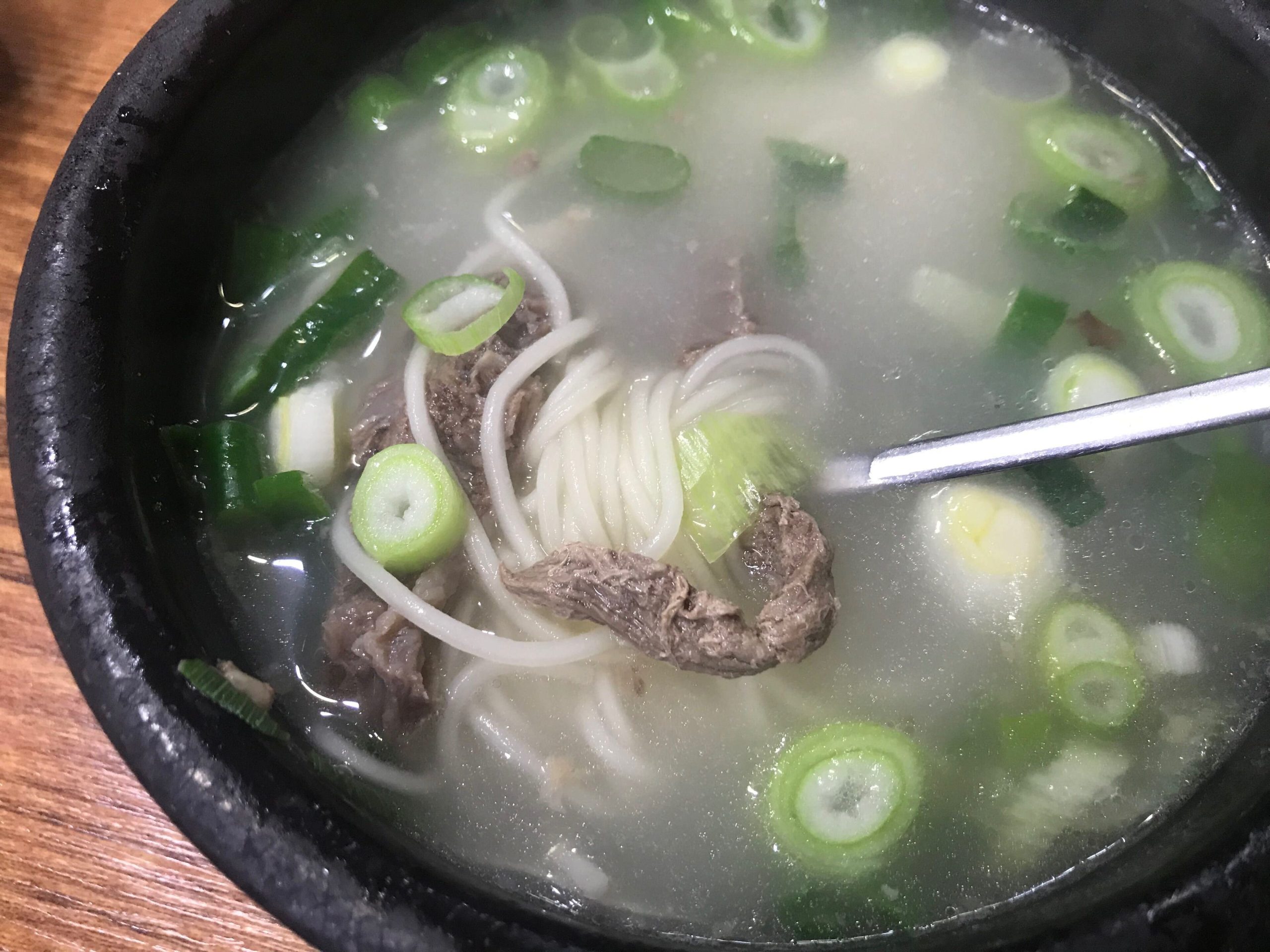
Seoul’s first officially registered restaurant, often called the oldest restaurant in Korea. It serves one thing above all: a milky ox bone soup with rice and thin noodles. Season it yourself with salt and green onions at the table. Listed in the Michelin Guide.
- Order: Seolleongtang about ₩15,000 (special ₩18,000)
- Address: 38-13 Ujeongguk-ro, Jongno-gu (near Jonggak Station)
- Good to know: Opening hours differ between listings, so check the map link. Breakfast is a classic time to go.
- Ratings & directions: Naver Map · Google Maps
Hadongkwan (하동관), since 1939
Three generations have served the same clear beef brisket soup. Office workers in Myeongdong eat it for breakfast, and it closes when the day’s soup runs out.
- Order: Gomtang about ₩18,000; larger “special” bowls cost more
- Address: 12 Myeongdong 9-gil, Jung-gu
- Good to know: Pay at the counter first, then sit. Water and kimchi are self-serve. Open from 7 a.m., closed Sundays.
- Ratings & directions: Naver Map · Google Maps
Woo Lae Oak (우래옥), since 1946
One of the most famous places in Korea for Pyongyang-style cold buckwheat noodles in a subtle beef broth, plus excellent bulgogi. A Seoul Future Heritage and Michelin Bib Gourmand.
- Order: Pyongyang naengmyeon (around ₩16,000–18,000)
- Address: 62-29 Changgyeonggung-ro, Jung-gu (near Euljiro 4-ga Station)
- Good to know: Closed Mondays. Summer weekend waits can exceed 100 groups; sign up on-site and get a KakaoTalk alert.
- Ratings & directions: Naver Map · Google Maps
Eulji Myeonok (을지면옥), relocated
A beloved Euljiro naengmyeon house that closed in 2022 because of redevelopment, then reopened in 2024 in a new five-story building at the entrance to Ikseon-dong. Fans say the noodles are just as good, and the wait is shorter.
- Order: Pyongyang naengmyeon about ₩15,000
- Address: 12 Samil-daero 30-gil, Jongno-gu (Jongno 3-ga Station, Exit 5)
- Good to know: Closed Sundays; break time mid-afternoon.
- Ratings & directions: Naver Map · Google Maps
Yonggeumok (용금옥), since 1932
Seoul-style loach soup, a hearty, peppery stew. The Seochon branch is the one listed as a Michelin Bib Gourmand; the original Da-dong shop shares the same roots but is run separately.
- Order: Chueotang (loach soup)
- Address: 41-2 Jahamun-ro, Jongno-gu (Seochon branch)
- Good to know: Closed Sundays. Not for everyone, but a true taste of old Seoul.
- Ratings & directions: Naver Map · Google Maps
Cheongjinok (청진옥), since 1937
The original haejangguk (hangover soup) house of Pimatgol, the old alley where commoners ate. It survived the area’s redevelopment and still serves its rich ox-blood and cabbage soup from early morning.
- Order: Haejangguk about ₩12,000 (special ₩15,000)
- Address: 32 Jong-ro 3-gil, Jongno-gu
- Good to know: Opens 6 a.m. daily, perfect after a late night.
- Ratings & directions: Naver Map · Google Maps
Yeolchajip (열차집), since 1954
Started as a street stall near the train tracks (yeolcha means “train”) and became Seoul’s classic spot for crispy mung bean pancakes with makgeolli.
- Order: Bindaetteok, 3 pieces about ₩19,000, with makgeolli
- Address: 47 Jong-ro 7-gil, Jongno-gu (near Jonggak Station)
- Good to know: Weekends open from 2 p.m. Best with friends in the evening.
- Ratings & directions: Naver Map · Google Maps
Buminok (부민옥), since 1956
An old-school office-worker canteen famous for fiery yukgaejang (spicy shredded beef soup) and tripe soup.
- Order: Yukgaejang about ₩11,000
- Address: 24-12 Da-dong-gil, Jung-gu
- Good to know: Closed Sundays; break 3–5 p.m.
- Ratings & directions: Naver Map · Google Maps
Jinju Hoegwan (진주회관), since 1962
Famous for one dish: thick, nutty kongguksu (noodles in cold soy milk), often called the most expensive and best in Korea. A summer ritual for Seoulites.
- Order: Kongguksu about ₩16,000
- Address: 26 Sejong-daero 11-gil, Jung-gu (near City Hall)
- Good to know: Pay before you eat. The summer lunch rush is intense; go before 11:30. Closed Sundays.
- Ratings & directions: Naver Map · Google Maps
Joseonok (조선옥), since 1937
A smoky Euljiro institution for charcoal-grilled marinated beef ribs. More of a splurge, but a time capsule of old Seoul dining.
- Order: Grilled beef ribs about ₩43,000 per 250 g; galbitang about ₩15,000
- Address: 6-5 Eulji-ro 15-gil, Jung-gu
- Good to know: Closed Sundays.
- Ratings & directions: Naver Map · Google Maps
Bonus: Old-School Food Streets

- Euljiro Nogari Alley (을지로 노가리골목): a Seoul Future Heritage alley of plastic tables, cheap draft beer, and grilled dried pollock (nogari). Manseon Hof is the biggest spot, about 100 m from Euljiro 3-ga Station. Naver Map · Google Maps
- Gwangjang Market (광장시장): Sunhee’s Bindaetteok (순희네 빈대떡) grinds mung beans right in front of you; pancakes are about ₩6,000. Naver Map · Google Maps
How to Eat at a Nopo Like a Local
- Order fast. Menus are short, often one or two dishes. Just say the dish name and how many: gomtang dugae juseyo (“two gomtang, please”).
- Pay first at some places (Hadongkwan, Jinju Hoegwan).
- Self-serve water and kimchi are normal. Look for the water dispenser and kimchi pot.
- Avoid 12:00–1:00 p.m. on weekdays, when office workers flood in.
- Many close on Sundays (Woo Lae Oak closes Mondays).
- Eat and go. Nopo are for eating, not lingering, especially when there’s a line.
For a modern take on Korean classics, see our Michelin Seoul guide, which includes many affordable Bib Gourmand spots.
Prices and hours change often at old restaurants. Check the map links before you go. Last checked: October 2026.
Order like a local
곰탕 두 개 주세요.
Gomtang du-gae juseyo.
“Two gomtang, please.” At a nopo, the dish name plus how many is all you need. Swap in 설렁탕 (seolleongtang) or 냉면 (naengmyeon) depending on the place.
Keep exploring: for more places locals really eat, see Tank’s local favorites in Seoul and my guide to sundae gukbap, a classic old-school soup. Eating solo? Read eating alone in Korea.
FAQ
What is the oldest restaurant in Seoul?
Imun Seolnongtang (이문설농탕), serving ox-bone soup since 1904.
What does nopo mean in Korean?
Nopo (노포, 老鋪) literally means “old shop”: a long-running, often family-run restaurant that has served the same few dishes for decades.
When is the best time to visit a nopo?
Avoid weekday lunch from 12:00 to 1:00 p.m., when office workers fill the tables. Many nopo close on Sundays, and Woo Lae Oak closes on Mondays.
Do I need to pay first at a nopo?
At some, yes. Hadongkwan and Jinju Hoegwan ask you to pay first. Water and kimchi are usually self-serve.