In Korea, drinking is rarely just drinking. A night of soju with coworkers, a first dinner with a partner’s parents, or a team celebration all come with small rules about who pours, how you hold your glass and when you drink. Koreans will forgive a visitor for getting them wrong, but knowing even three or four of them gets an immediate, delighted reaction.
Quick answer: Never pour your own drink: pour for others, oldest first. Hold the bottle with two hands when pouring for someone older, and hold your glass with two hands when they pour for you. Turn your head slightly away from elders when you drink. Do not top up a glass that is not empty. If you want to stop, leave your glass full.

Pouring: The Rules That Matter Most
- Do not pour your own glass. Pouring is something you do for others, and someone will do it for you. Filling your own glass looks lonely, and some older Koreans joke that it brings bad luck to the person sitting across from you.
- Pour for the oldest or most senior person first. Age and rank decide almost everything at a Korean table.
- Use two hands for elders. Hold the bottle with your right hand and touch your right wrist or forearm with your left hand. With friends your own age, one hand is fine.
- Do not top up a glass that is not empty. Adding to a half-full glass (첨잔, cheomjan) is how drinks are offered at ancestral rites, so many Koreans avoid it at the table. Wait until the glass is empty, then refill.
Receiving and Drinking
- Hold your glass with two hands when someone older pours for you, or hold it in your right hand with your left hand supporting it.
- Turn your head slightly away from elders or your boss when you drink, and cover your mouth lightly with your hand. It shows respect, and Koreans notice it immediately.
- The first glass is often finished in one go after a toast. It is a custom, not a rule; sipping is acceptable, especially if you say you do not drink much.
- Return the favor. Once someone pours for you, pour for them when their glass is empty.
Toasts You Will Hear
| Korean | Say it | When to use it |
|---|---|---|
| 건배! | Geonbae! | The standard “Cheers!” |
| 짠! | Jjan! | Casual cheers with friends, the sound of glasses clinking |
| 위하여! | Wihayeo! | “For…!” at company dinners; someone shouts a cause, everyone answers |
| 원샷! | Wonsyat! | “One shot!”: finish the glass |
Somaek and Other Drinking Games
Somaek (소맥) is soju mixed into beer, usually about one part soju to two or three parts beer, and it is the default drink at most Korean company dinners. You will also see people tap the bottom of the soju bottle, twist it, or flick the cap’s twist-off tail as a mini game. Our soju and drinking culture guide covers the brands, prices and somaek in more detail.
How to Say No Politely
- Leave your glass full. A full glass signals you are done, because no one will refill it.
- Give a reason. “I have to drive” or “I do not drink well” is accepted without argument in most groups today.
- Never drink and drive. Korea’s legal limit is 0.03% blood alcohol, stricter than many countries. Use a taxi or a designated-driver service (대리운전, daeri unjeon), which Koreans use routinely after drinking.
- Pressure is fading. Younger Koreans drink less, low-alcohol soju is a bestseller, and forcing someone to drink is widely seen as old-fashioned.
Who Pays?
Traditionally, the person who invited you or the most senior person pays, and the younger person offers to pay for the second round. Among friends and younger people, splitting the bill (더치페이, deochi pei, “Dutch pay”) is now normal. Whatever happens, it is polite to at least offer.
Korean drinking culture: soju, beer and what it costs
Jinro soju regularly tops global rankings of the best-selling spirit brands by volume, and almost all of it is drunk in Korea. Here’s what’s in the green bottles, what it costs, and where Koreans actually drink.
The soju brands you’ll see
HiteJinro controls roughly 60% of the soju market and Lotte Chilsung about 18–20%. Regional makers share the rest. Retail receipt data from 2025–2026 shows Chamisul still on top, with retro Jinro overtaking Saero as the second most-bought brand.
| Brand | Maker | ABV | What to know |
|---|---|---|---|
| Chamisul Fresh (참이슬) | HiteJinro | 16.0% | The default. Green bottle, red-and-white label |
| Chamisul Original | HiteJinro | ~20% | The stronger red-cap version older drinkers like |
| Jinro (진로) | HiteJinro | 16% | Clear sky-blue bottle and toad mascot. Retro and trendy |
| Chum Churum (처음처럼) | Lotte Chilsung | 16% | Softer taste, went zero-sugar in 2025 |
| Saero (새로) | Lotte Chilsung | 16% | Zero-sugar, launched 2022, sold 100M bottles in ~7 months |
Soju is getting weaker, on purpose
In the 1920s soju was around 35%. Chum Churum launched at 20% in 2006 and has dropped step by step to 16% in 2025. Chamisul Fresh went to 16.0% in 2024. Lighter, smoother, zero-sugar: that’s the trend.
Regional soju: drink the local bottle
| Region | Local soju |
|---|---|
| Busan | C1, Daesun (Daesun Jujo) |
| Gyeongnam (Changwon) | Good Day 좋은데이 (Muhak) |
| Jeonnam | Ipsaeju 잎새주 (Bohae) |
| Daegu / Gyeongbuk | 맛있는 참 (Kumbokju) |
| Jeju | Hallasan 한라산 (17 and 21) |
Ordering the local soju is an easy way to make friends at the next table. Jeju’s Hallasan is a favorite souvenir.
Beer and makgeolli

Beer: OB Beer’s Cass is Korea’s #1 beer brand, and has been for 13 years running. HiteJinro’s Terra (2019) and Kelly (2023) are the challengers. Korean lagers are light, made to drink cold with fried chicken.
Makgeolli: Milky, lightly sparkling rice wine, usually 6%. Seoul Jangsu is the best-known brand in convenience stores; Jipyeong has been growing fast and exporting. Classic pairing: makgeolli with pajeon (savory pancake) on a rainy day.
What does drinking in Korea cost?
| Where | Soju per bottle (2025–2026) |
|---|---|
| Convenience store | ~₩1,900 |
| Most Seoul restaurants | ₩5,000–7,000 |
| Gwanghwamun / Apgujeong | ₩8,000–10,000 |
| Gangnam Station area | up to ~₩12,000 |
| Promo restaurants | ₩2,000 (a growing trend since 2025) |
₩5,000 used to be the standard restaurant price. In late 2025 a bottle cost about ₩6,000 in Euljiro and around ₩12,000 near Gangnam Station, while some restaurants started selling soju and beer at ₩2,000 to pull in customers.
Where Koreans drink
- Pocha (포차): Casual pubs or street tents serving soju with big plates of anju (drinking food).
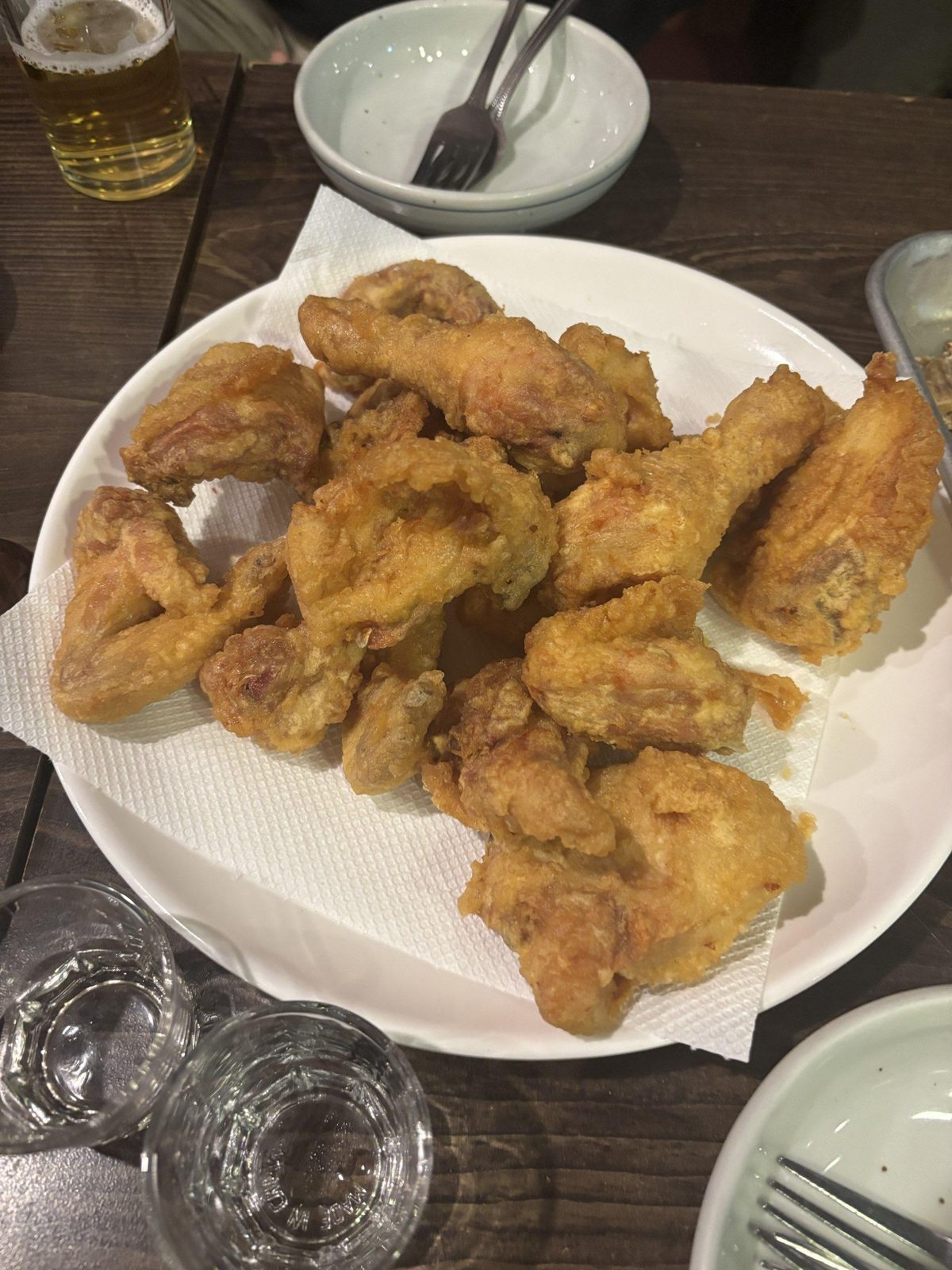
- Hof (호프): Beer halls. Fried chicken and draft beer, aka chimaek.
- BBQ restaurants: Soju with grilled meat is the most common Korean night out. See our Korean BBQ guide.
- Convenience store tables: Cheapest bar in Korea. Grab a can and some snacks at the plastic tables outside.
What a good night looks like at the end: one table of empty Cass, Kelly and soju bottles at a nogari pub in Yangjae. Nobody drinks without food, and these are the anju I see most.


Legal drinking age and drinking in public
Korea uses the calendar year for alcohol. You can buy alcohol from January 1 of the year you turn 19, whatever your birthday. In 2026 that means anyone born in 2007 or earlier. Bring ID; stores and bars do check.
Drinking in public is generally legal, but since 2021 local governments can declare alcohol-free zones (금주구역) in parks, playgrounds and similar places, with fines of up to ₩100,000. Check for signs.
The morning after: hangover cures

Haejangguk (해장국, “hangover soup”), usually with ox-blood or bean sprouts, is what Koreans eat the morning after. Convenience stores also sell hangover drinks and pills. Condition (HK inno.N) is the biggest seller at about 43% of the market, followed by Sangkwaehwan (Samyang). Since 2025, products must provide scientific evidence to claim hangover relief, and Dawn 808 passed that review in December 2025. Drink water too.
The cheapest night out in Korea is pyeonmaek: beer from a convenience store, drunk at the plastic tables outside.
On rainy days, the drink of choice is makgeolli with a pancake. See why Koreans eat pajeon when it rains.
Order like a local
소주 한 병 더 주세요.
Soju han byeong deo juseyo.
“One more bottle of soju, please.”
저 술 잘 못 마셔요.
Jeo sul jal mot masyeoyo.
“I am not a good drinker.” The polite way to slow down without offending anyone.
운전해야 해요.
Unjeonhaeya haeyo.
“I have to drive.”
Want to practice? My go-to cheap neighborhood pocha in Gangnam is Wattaga near Yangjae Station: spicy stir-fried squid, kimchi jjigae and soju for two came to ₩50,000.
FAQ
Is it rude to pour your own drink in Korea?
It is not offensive, but it looks odd. Koreans pour for each other, so wait for someone to fill your glass, or fill theirs and they will fill yours.
Why do Koreans turn their head when drinking?
It is a sign of respect toward older or more senior people at the table. With friends of the same age, there is no need.
Do I have to finish my glass?
No. The first glass after a toast is often finished in one go, but you can sip, and leaving your glass full is a polite way to say you are done.
What is the drinking age in Korea?
Korea uses 19 as the legal drinking age, counted by birth year. See our drinking culture guide for details on drinking in public.
How strong is soju?
Most mainstream soju is 16% ABV in 2026, about three times as strong as beer. Flavored fruit soju is lower, around 12–13%.
What is the cheapest way to drink in Korea?
Convenience stores. A bottle of soju costs about ₩1,900. See our convenience store combos for snacks to pair it with.
More Korean Etiquette
- Korean restaurant etiquette: ordering, paying and table rules
- Korean table manners: eating with a Korean family
- Hoesik: the Korean company dinner
- Soju and Korean drinking culture