Korean convenience stores are one of the best parts of a trip to Korea, and one of the most confusing if you eat halal. Buldak, Shin Ramyun and Pepero all have halal-certified versions, so it is easy to assume the packs on the shelf in Seoul are halal too. Most of them are not. Korean brands make their certified versions mainly for export, and the packs sold inside Korea are usually the domestic recipe.
This guide explains how to tell the difference in about ten seconds, which Korean words on the label matter, and where in Seoul you can actually buy the certified versions.
Quick answer: Only trust a printed halal logo: KMF (Korea Muslim Federation), MUI (Indonesia) or JAKIM (Malaysia). Most packs on Korean convenience store shelves, including Buldak and Shin Ramyun, are domestic versions with no halal logo. For certified ramyeon and snacks, go to the halal marts near Seoul Central Mosque in Itaewon. In any store, check the allergen box on the label for 돼지고기 (pork).

Why the Same Brand Can Be Halal Abroad but Not in Korea
Korean food companies have been building halal production for over a decade. Nongshim set up a dedicated halal line at its Busan factory in 2011 for Halal Shin Ramyun, and Samyang has had products certified by the Korea Muslim Federation since 2014. But those products are made for export markets like Malaysia, Indonesia and the Gulf. The everyday versions sold in Korea are a different recipe, often with meat extracts from non-certified sources, and they do not carry the logo.
So the brand name tells you nothing. The logo on the specific pack in your hand tells you everything.
Popular Korean Snacks: Halal Status at a Glance
| Product | Halal version exists? | On Korean shelves |
|---|---|---|
| Buldak (불닭볶음면) | Yes, export packs certified by KMF and others | Usually the domestic version, no logo |
| Shin Ramyun (신라면) | Yes, Halal Shin Ramyun from a dedicated Busan line | Domestic Shin uses beef extract, no logo |
| Pepero (빼빼로) | Certified export versions exist | Domestic packs are not certified |
| Choco Pie (초코파이) | Halal versions are made outside Korea | Korean-made Choco Pie contains pork gelatin |
| Jelly and gummies | Rarely | Gelatin source is often pork or not stated |
Halal status can change by factory and by year, so treat this table as a guide and always confirm with the logo on the pack.
The Korean Label Words That Matter
Here is the best shortcut most travelers miss: Korean law requires food labels to list allergens in a box marked 알레르기 유발물질 (allereugi yubalmuljil), and pork is one of the mandatory allergens. If you see 돼지고기 in that box, put it back.
| Korean | Say it | Meaning |
|---|---|---|
| 돼지고기 | dwaejigogi | Pork |
| 젤라틴 | jellatin | Gelatin (check the source) |
| 쇠고기 / 소고기 | soegogi / sogogi | Beef (not halal unless certified) |
| 닭고기 | dakgogi | Chicken (not halal unless certified) |
| 주정 | jujeong | Alcohol (ethanol) |
| 같은 제조시설 | gateun jejosiseol | “Made in the same facility as…” |
That last line usually appears as a sentence such as “이 제품은 돼지고기를 사용한 제품과 같은 제조시설에서 제조하고 있습니다,” meaning the product is made in a facility that also processes pork. How strictly you treat this is your call.
If You Avoid Pork and Alcohol but Are Not Certified-Only
Muslim travelers follow different standards. If you eat Muslim-friendly food without requiring certification, these categories are usually the lowest-risk places to start, though you should still read the label every time:
- Plain milk and flavored milk drinks
- Fresh fruit cups and whole fruit
- Plain roasted seaweed (gim) snacks
- Bread and pastries with no meat filling (check for lard and gelatin)
- Tuna mayo triangle gimbap (check the rice seasoning for 주정)
Skip anything labeled 불고기맛 (bulgogi flavor) or other meat flavors, the hot-food counter (shared fryers and tongs), and jelly sweets. Our Korean convenience store food guide covers what everything else on the shelf is.
Where to Buy Certified Halal Ramyeon and Snacks in Seoul
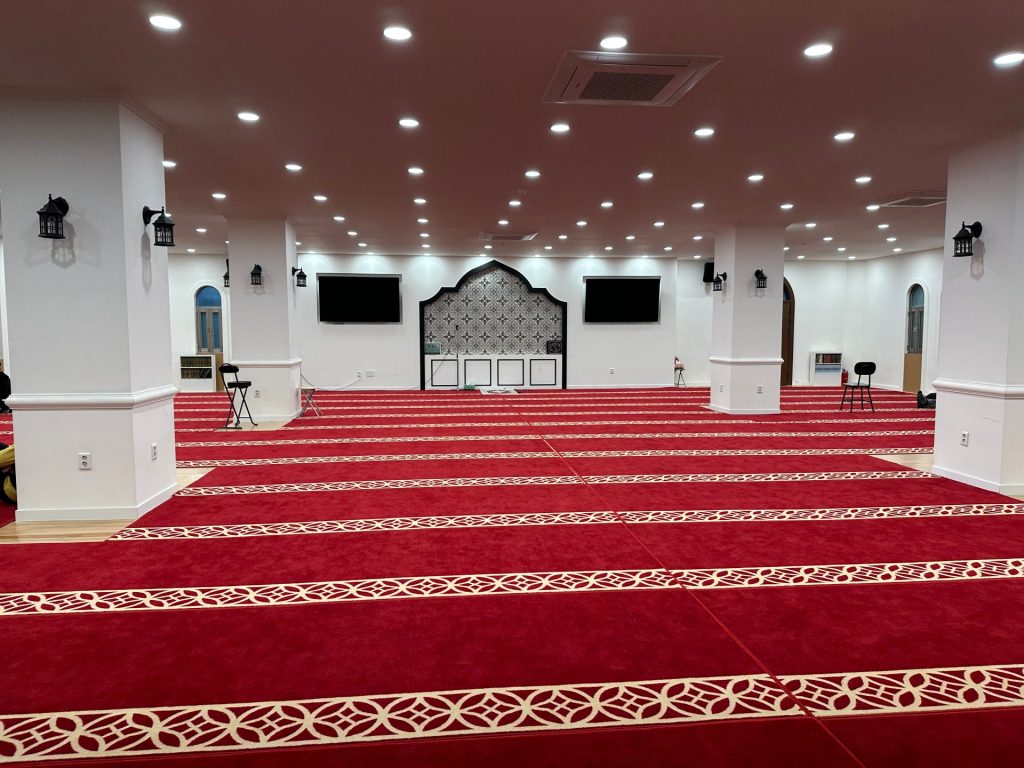
Your best bet is Itaewon. The streets leading up to Seoul Central Mosque, about 10 minutes uphill from Itaewon Station, have halal grocery stores that stock export versions of Korean ramyeon and snacks with the halal logo printed on the pack. This is also where most of Seoul’s halal restaurants are; see our halal restaurant guide.
Flying out? Our Incheon Airport food guide lists halal and Muslim-friendly options in both terminals, plus the 24-hour prayer rooms.
Order like a local
할랄 제품 있어요?
Halal jepum isseoyo?
“Do you have halal products?”
이거 돼지고기 들어가요?
Igeo dwaejigogi deureogayo?
“Does this contain pork?” Staff can usually check the label with you.
Need it in writing? Our free Korean diet card has a halal option you can show staff, and our phrase cards has more ready-made lines you can show staff or play out loud.
Planning the whole trip? Our 3-day halal food itinerary for Seoul puts these tips into a day-by-day plan.
FAQ
Is Buldak halal in Korea?
The Buldak packs on regular Korean store shelves are usually the domestic version without a halal logo. Certified Buldak is mainly made for export. Look for a KMF, MUI or JAKIM logo on the pack, or buy at a halal mart in Itaewon.
Is Shin Ramyun halal?
Halal Shin Ramyun exists and is made on a dedicated line at Nongshim’s Busan factory, but the regular Shin Ramyun sold in Korea uses beef extract and is not certified.
Is Choco Pie halal?
Not the Korean-made one: its marshmallow contains pork gelatin. Halal Choco Pie versions are produced outside Korea for other markets.
How do I check if a Korean snack contains pork?
Find the allergen box marked 알레르기 유발물질 on the back of the pack. Pork (돼지고기) is a mandatory allergen in Korea, so it must be listed there if it is an ingredient.