Korean fruit is famous for being big, beautiful, and very sweet, and often surprisingly expensive. Some varieties are hard to find anywhere else, like the bumpy-topped hallabong from Jeju or the crisp, juicy Korean pear. This guide covers the fruits worth trying, when they’re in season, what they cost in 2025–2026, and how to buy them like a local.
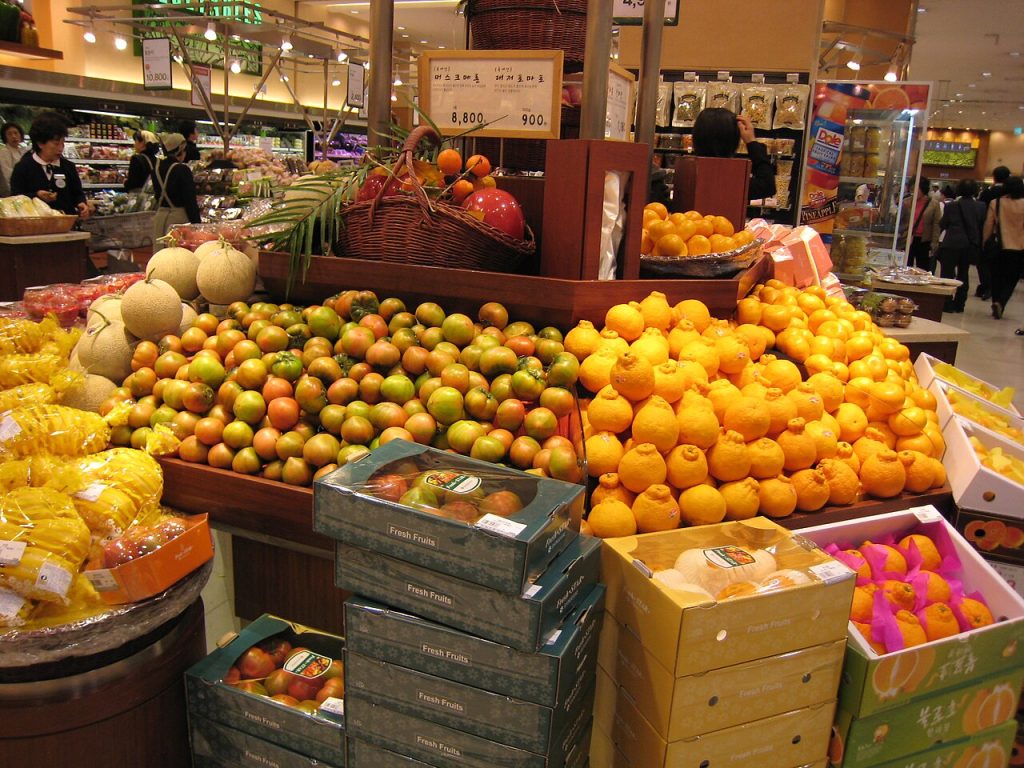
In season right now (October–November): Fuji apples, Korean pears, sweet persimmons, fresh jujubes, shine muscat grapes (cheap this year), hwanggeumhyang citrus, and the first Jeju mandarins.
Korean Fruit Calendar
| Fruit | Korean | Season | Famous region |
|---|---|---|---|
| Strawberries | 딸기 | Dec–Apr | Nonsan |
| Hallabong | 한라봉 | Dec–Apr | Jeju |
| Redhyang | 레드향 | Late Dec–Apr | Jeju |
| Cheonhyehyang | 천혜향 | Mar–May | Jeju |
| Chamoe (Korean melon) | 참외 | May–Jul | Seongju |
| Peaches | 복숭아 | Jul–Sep | Chungju, Icheon |
| Watermelon | 수박 | Jun–Aug | Haman |
| Hongro apples | 홍로 | Aug–Sep | Gyeongbuk |
| Shine muscat | 샤인머스캣 | Sep–Dec | Sangju, Gimcheon |
| Hwanggeumhyang | 황금향 | Late Aug–Dec | Jeju |
| Korean pear (Singo) | 배 (신고) | Sep–Nov | Naju |
| Fuji apples | 사과 (부사) | Oct–Nov | Cheongsong |
| Persimmons | 감 | Oct–Nov | Changwon, Cheongdo, Sangju |
| Jujubes | 대추 | Early–mid Oct (fresh) | Chungbuk |
| Jeju mandarins | 감귤 | Nov–Jan | Seogwipo |
The Fruits You Must Try
Shine muscat (샤인머스캣)

Huge, seedless green grapes with a mango-like sweetness that you eat skin and all. Once a luxury gift, prices have fallen sharply because of oversupply: a 2 kg box averaged about ₩11,600 in November 2025, less than half of its peak, and prices fell further in 2026. Now is a great time to try it. Look for fruit sold with a sugar level of 16 Brix or higher.
Korean pear (배)
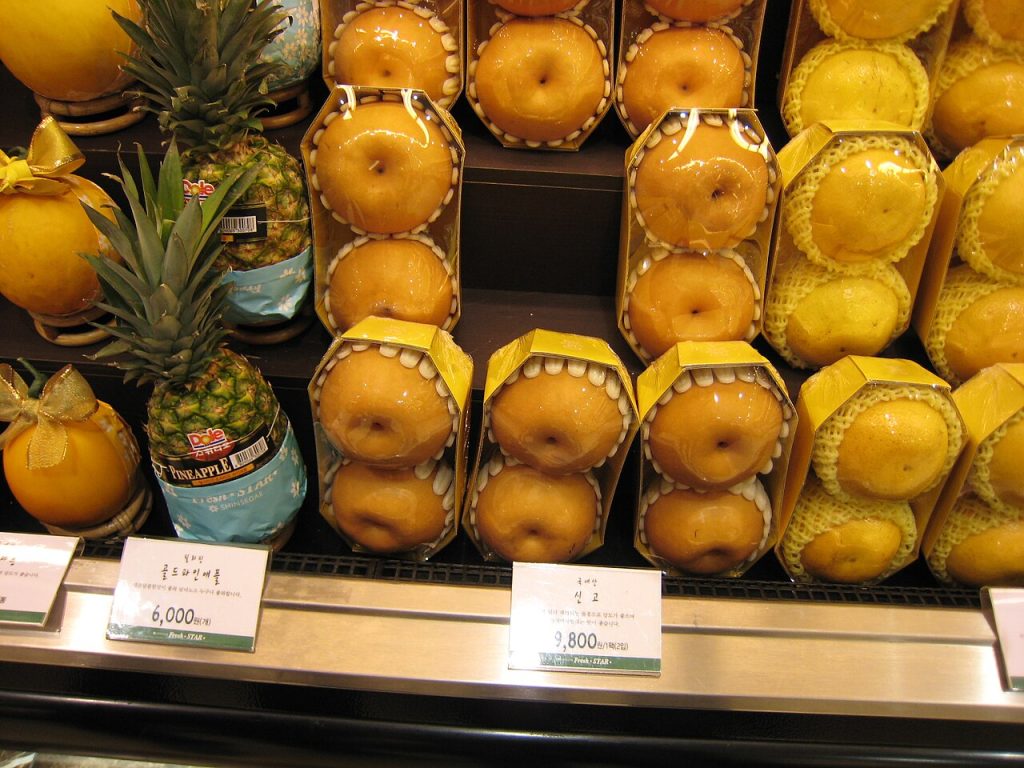
Round, golden, enormous, and incredibly crisp and juicy, nothing like a European pear. The Singo variety from Naju is the classic. Prices jump before Chuseok (Korean Thanksgiving) when pears are a top gift. Choose heavy pears with smooth skin.
Korean apples (사과)
Hongro apples arrive in late summer, and crunchy Fuji (부사) apples peak in October and November. Apples made headlines in 2024 when prices hit an all-time high after a poor harvest. In 2026 the harvest recovered and prices dropped about 25% from the year before.
Jeju citrus: hallabong, redhyang, cheonhyehyang, and more
Jeju Island grows a whole family of premium citrus. Hallabong is easy to spot by the bump at the stem, named after Jeju’s Hallasan mountain. Redhyang has red-orange skin and a crisp bite, and cheonhyehyang is intensely fragrant. In October, hwanggeumhyang is the one in season, and regular Jeju mandarins (감귤) start in November.
Persimmons (감)
Autumn’s signature fruit, in three forms: dangam (단감), firm and crunchy like an apple; hongsi (홍시), soft and jelly-like when fully ripe; and gotgam (곶감), dried persimmons made in winter, a famous product of Sangju. Cheongdo’s seedless bansi persimmons are a local specialty.
Korean strawberries (딸기)
Korean winter strawberries are famously sweet. The Seolhyang (설향) variety dominates, and premium types like the giant Kingsberry (킹스베리) are popular as gifts. In January 2026 they averaged about ₩2,820 per 100 g.
Chamoe (참외)
A yellow, striped Korean melon that’s crunchy and lightly sweet, eaten skin-on or peeled. It’s a classic summer fruit, mostly from Seongju.
Where to Buy Fruit in Korea
- Traditional markets (Gwangjang, Mangwon, Gyeongdong): sold by the piece or by the small basket (바구니). Vendors may let you taste.
- Supermarkets (Emart, Lotte Mart, Homeplus): packs with clear prices and frequent discounts.
- Convenience stores: single fruits and cut-fruit cups; easy but more expensive.
- Department store food halls (Hyundai, Shinsegae, Lotte): flawless premium fruit and gift boxes, especially before Chuseok and Lunar New Year.
- Garak Market: Seoul’s wholesale market, mainly by the box, for serious bargains.
How to Read Fruit Prices
- Prices may be per piece (개), per basket (바구니), or per box by weight (5 kg, 10 kg).
- Boxes often list a count like “35~55과,” meaning 35 to 55 pieces of fruit in the box. Fewer pieces means bigger, more expensive fruit.
- Baskets can’t be split; you buy the whole basket.
- Light bargaining is fine at markets, never at supermarkets.
Can You Take Korean Fruit Home?
Usually not. Most countries ban or strictly limit fresh fruit from abroad:
- United States: almost all fresh fruit is prohibited. Always declare it; you won’t be fined if you declare, even if it’s confiscated.
- Japan: fruit imports are strictly restricted and require a plant quarantine certificate, even for small gifts.
- EU, Australia, and others: most also ban or restrict fresh fruit.
Better souvenirs: dried persimmons, dried jujubes, fruit syrups, and fruit snacks. Check your destination’s rules even for these.
Love Korean snacks too? See what Koreans actually buy, ranked by sales.
Prices are averages from Korea’s agricultural price data and news reports, and vary by store and grade. Last checked: October 2026.